Do you have an aging parent suffering from cognitive decline, or a disabled adult child who needs help managing their monthly federal benefits? Stepping up to handle someone else’s financial affairs is a profound responsibility.
According to data from the Social Security Administration, nearly 4.7 million Americans rely on a designated representative payee to receive and manage their monthly retirement, disability, or Supplemental Security Income payments. To legally take on this responsibility, you must file specific government paperwork and establish dedicated bank accounts.
Navigating the legal steps for a proper Social Security Representative Payee Form notarization is the most effective way to protect your loved one, satisfy strict financial institution requirements, and ensure uninterrupted benefit payments.
Let us examine the details of this legal process, why financial institutions demand authenticated paperwork, and how you can complete your document notarization online in minutes.
What is an SSA representative payee form?
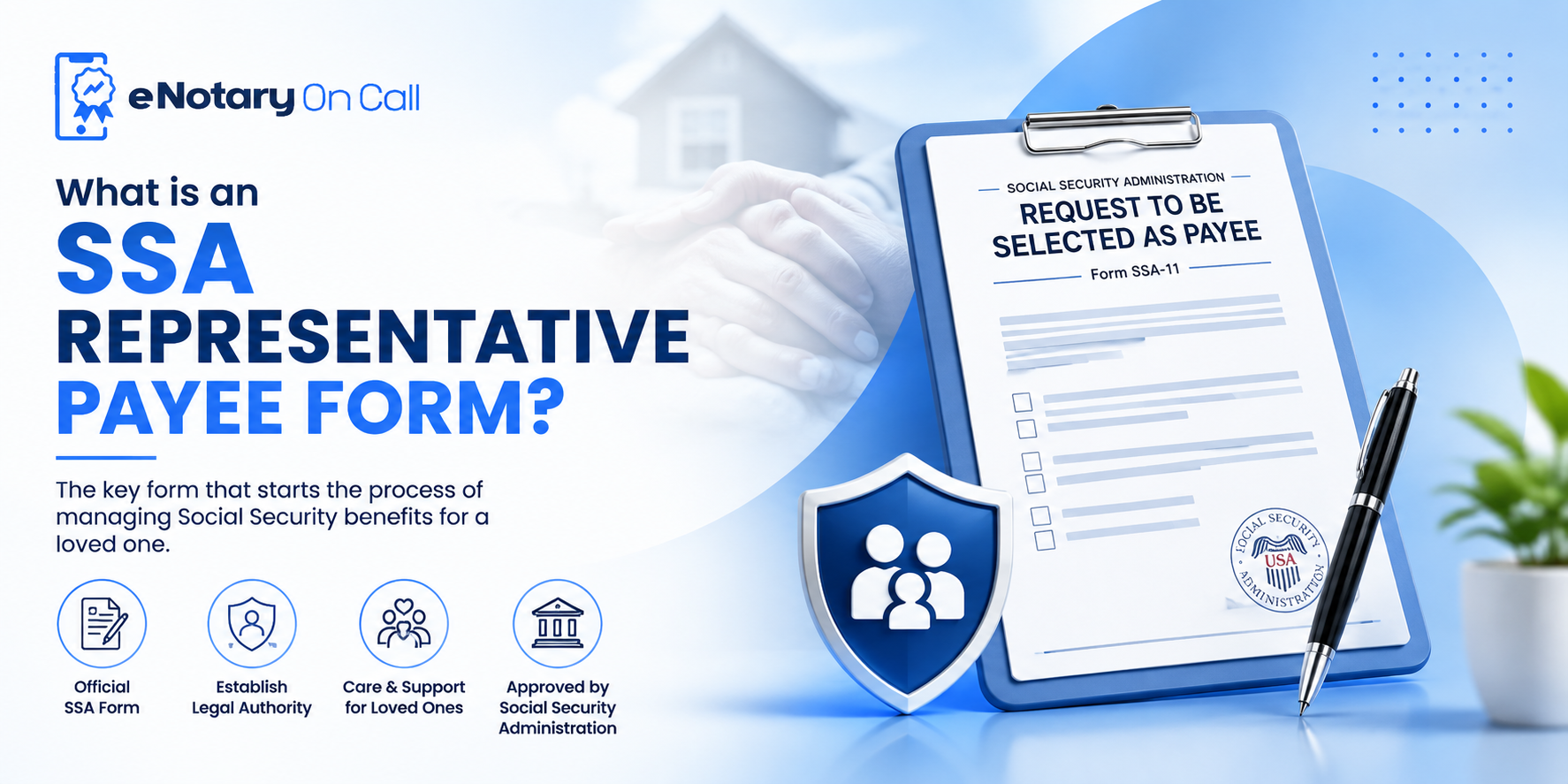
The core government document used to apply for this designation is official Form SSA-11, formally titled the Request to be Selected as Payee.
When the Social Security Administration determines that a beneficiary can no longer manage or direct the management of their own benefit payments, they appoint a trusted individual or organizational representative payee. The payee is legally mandated to use all funds solely for the beneficiary’s current and foreseeable needs, including housing, food, medical care, and personal comfort.
When completing the ssa representative payee form, you must disclose:
- Your full legal identity and social security number.
- Your exact relationship to the beneficiary (e.g., adult child, spouse, legal guardian).
- Details regarding where the beneficiary resides and who provides their daily care.
- Your financial track record and any history of legal or financial disqualifications.
Because managing federal benefit funds carries strict fiduciary duties, both federal agencies and commercial banks require complete transparency before granting account access.
Why is Social Security Representative Payee Form Notarization Crucial?
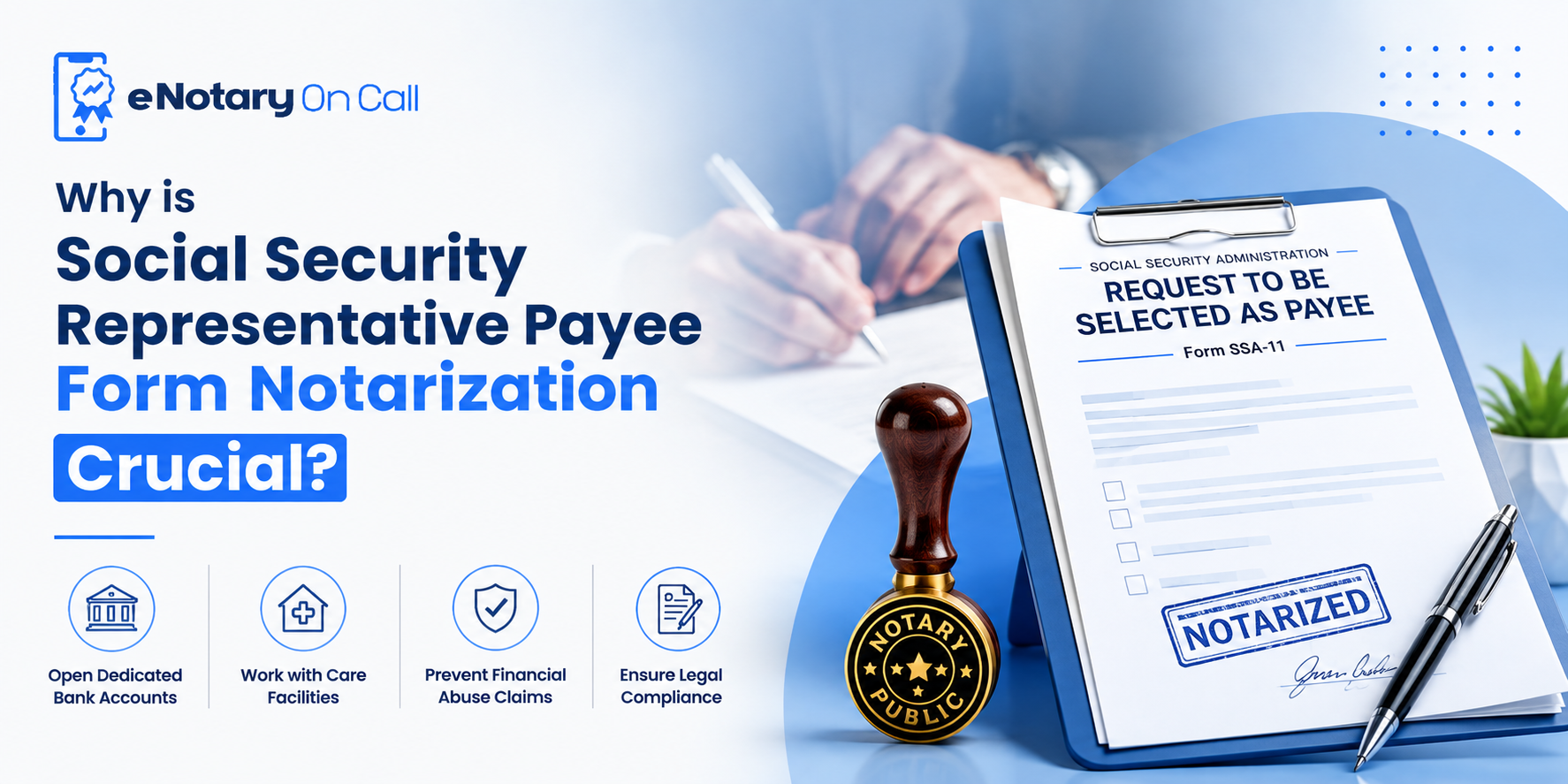
A common point of confusion for caregivers is whether the Social Security Administration requires a notary stamp directly on Form SSA-11. The federal agency itself handles initial identity verification through an in-person or phone interview. However, filing Form SSA-11 with the government is only the first step in a much larger legal and financial workflow.
Here is why completing a Social Security Representative Payee Form notarization package is mandatory when managing real-world financial tasks:
1. Commercial Bank Account Setup Requirements
Federal law requires representative payee funds to be deposited into a dedicated, segregated bank account structured specifically as [Beneficiary’s Name] by [Payee’s Name], Representative Payee.
Major commercial banks (such as Chase, Bank of America, and Wells Fargo) will not open this special account without verifying your legal authority.
Banks frequently require a notarized representative payee affidavit alongside your official SSA appointment letter to shield themselves from potential financial fraud liability.
2. Interaction with Care Facilities and Nursing Homes
If your loved one resides in an assisted living facility or nursing home, those institutions often manage room, board, and medical care payments directly from the payee account. Care facilities regularly demand a notarized copy of your payee authorization and financial power of attorney before accepting your signature on long-term residency contracts.
3. Preventing Claims of Elder Financial Abuse
When family members disagree about how an elderly parent’s money is being managed, legal disputes can erupt.
Securing a Social Security Representative Payee Form notarization on all supporting financial affidavits establishes clear, indisputable legal proof of your identity and good-faith authority from day one.
State Notarization Standards: Texas and Florida
Because bank account creation and power of attorney laws are governed at the state level, your geographic location dictates how your legal paperwork must be executed.
1. Options for Texas Caregivers
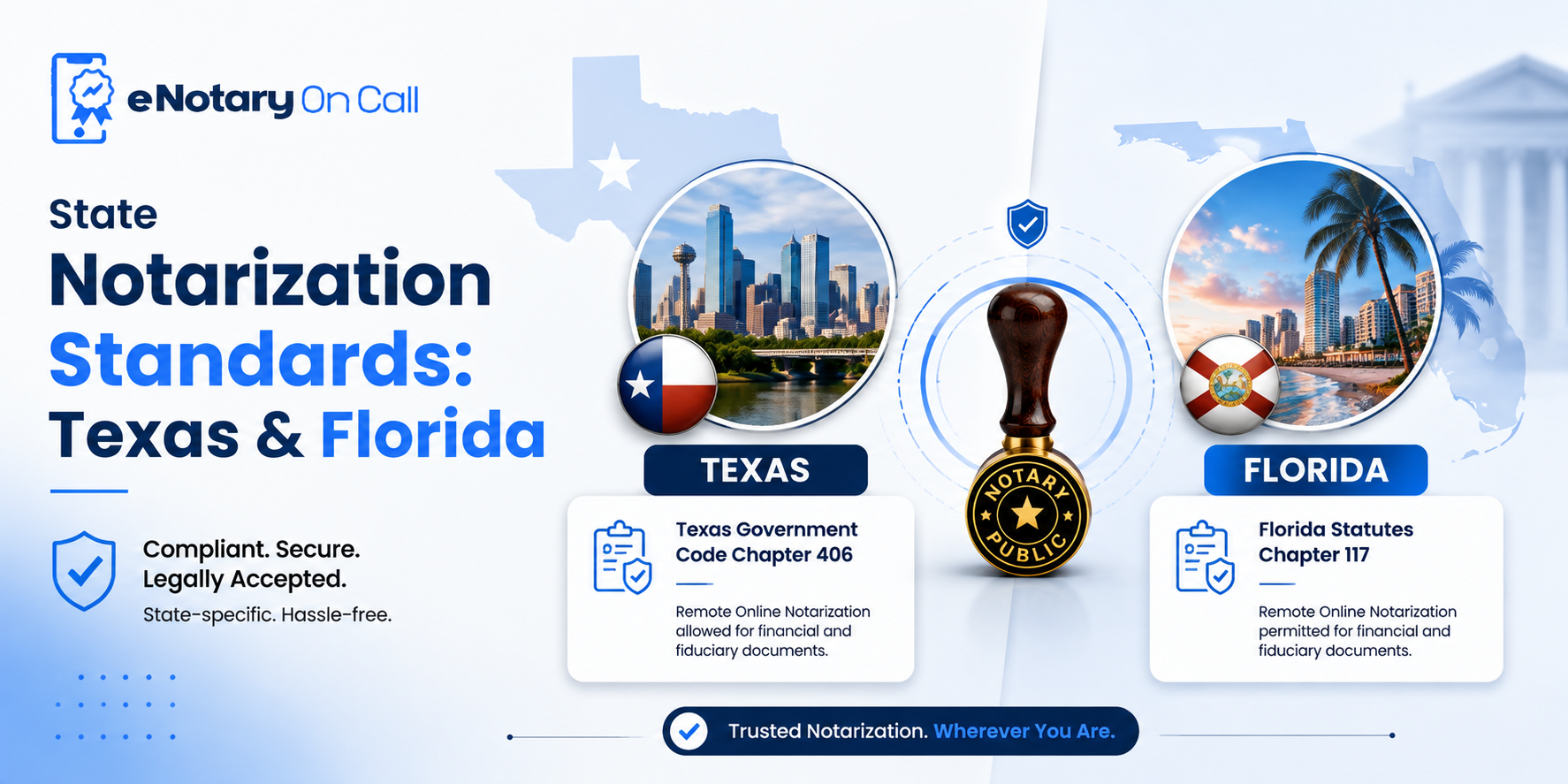
If you reside in or manage care for a family member in Texas, state law offers robust digital options. Under Texas Government Code Chapter 406, caregivers can execute financial affidavits and estate documents via encrypted video.
Connecting with an online notary Texas session allows you to complete your paperwork without leaving your home or taking time away from caregiving duties.
2. Options for Florida Caregivers
Florida is home to one of the largest senior populations in the United States. Under Chapter 117 of the Florida Statutes, Florida permits remote online notarization for financial and fiduciary documents.
Utilizing an online notary Florida session guarantees that your payee affidavits meet strict state compliance standards. Relying on dedicated Florida Notary Services ensures local financial institutions accept your documents without administrative delays.
How to Notarize Your Representative Payee Documents Online?
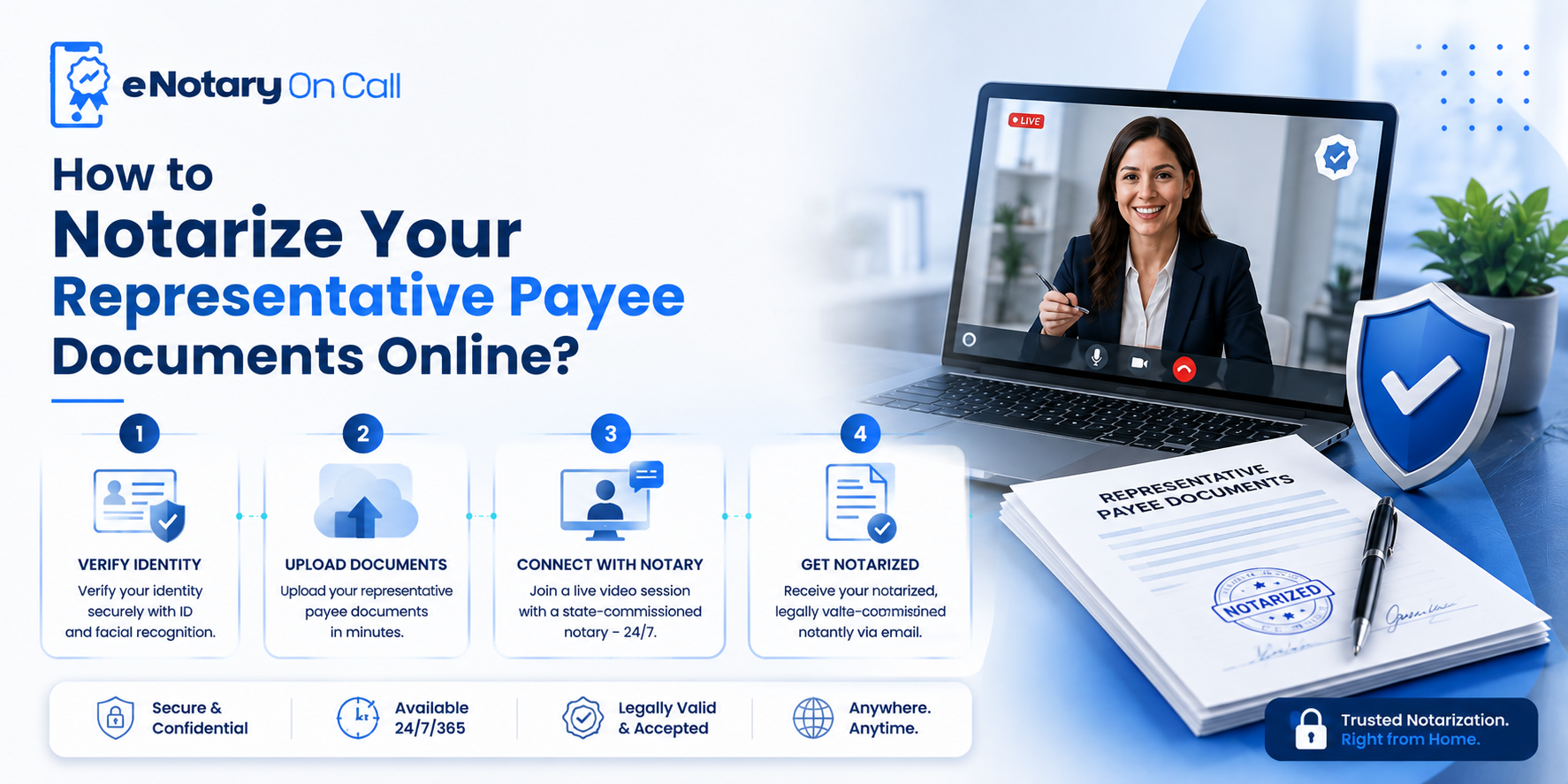
Caregivers rarely have the luxury of taking hours out of their day to drive to a bank branch, wait in line, or transport an elderly relative to a physical notary office. Modern Remote Online Notarization laws allow you to complete the entire verification process digitally.
By utilizing established online notary services like eNotary On Call, you can connect with a state-commissioned notary 24/7/365 from your smartphone, tablet, or computer.
eNotary On Call simplifies the entire process into four simple steps:
Notarization in 4 Easy Steps
Get any document notarized in minutes, no appointments, no travel, no hassle.
Step 1 Verify Identity
Confirm your identity using a government-issued ID and facial recognition.
Step 2 Upload Document
Upload the document you need notarized. Supports PDF, images, and more.
Step 3 Connect with Notary
Join a secure live video session with a certified notary, available 24/7.
Step 4 Get Notarized
Receive your fully executed, court-admissible document instantly in your inbox.
Conclusion
Stepping into the role of a representative payee is an act of deep family dedication, but managing the surrounding legal and banking requirements requires attention to detail. Do not allow unverified paperwork or bank delays to disrupt your loved one’s care or access to benefit funds.
By completing a proper Social Security Representative Payee Form notarization for your supporting bank affidavits and financial authorizations, you establish undeniable legal clarity.
Experience the speed, total security, and complete legal compliance of eNotary On Call to finalize your essential family documents today.
FAQs
1. Are online notarized payee documents accepted by major commercial banks?
Yes. Documents authenticated through Remote Online Notarization carry the exact same legal validity as traditional paper notarizations and are accepted by financial institutions nationwide.
2. Do I need to make an appointment in advance for an online notarization?
No appointment is necessary. Certified state-commissioned notaries are available on-demand 24 hours a day, 7 days a week on eNotary On Call.
3. How does eNotary On Call protect my family’s sensitive personal data?
The platform utilizes bank-grade 256-bit encryption, strict biometric credential analysis, and secure cloud infrastructure to ensure all personal and financial data remains strictly confidential.
4. Can I notarize a Power of Attorney alongside my representative payee paperwork?
Yes. You can upload and notarize multiple legal documents during a single online session with eNotary On Call.
5. What forms of identification are accepted for identity verification?
You can verify your identity using a valid state driver’s license, U.S. passport, state photo ID card, or military ID.
5. How long does an online notarization session take?
The entire process usually takes less than ten minutes from document upload to receiving your final PDF.
7. How much does an online notarization cost?
Online notarization sessions are highly affordable, starting at just $25 per session.
8. Can I complete the notarization if I am in a different state than my elderly parent?
Yes. eNotary On Call supports multi-party remote sessions, allowing family members in different states to join the same secure video call.
9. How quickly do I receive the final notarized document?
Your fully executed, court-admissible PDF document is delivered to your email inbox immediately after the live video call ends.