
 by
by Quick Answer: Yes, in most cases, you should notarize a Power of Attorney, and in some states, it may be legally required. Banks, healthcare providers, title companies, and financial institutions frequently reject unsigned or improperly executed POAs, even when notarization is optional. Getting your Power of Attorney notarized helps confirm identity, reduce fraud risk, and improve acceptance.
You finished preparing the Power of Attorney. Names are filled out. The authority is listed. Dates are entered. Now comes the question that stops many people: “Do I actually need a notary for a Power of Attorney?”
It might sound simple, but it depends on what type of POA you have, where you live, and who will rely on the document later. This is where people make mistakes. People assume a signature alone is enough. Then months later, a bank refuses the document, a healthcare provider won’t accept it, or a transaction gets delayed because execution requirements were missed.
Once you know what to look for, understanding notarization for a Power of Attorney is much easier. So, let’s know when notarization is required, when it’s optional, why institutions still ask for it, and how to notarize a POA correctly.
What Is a Power of Attorney?
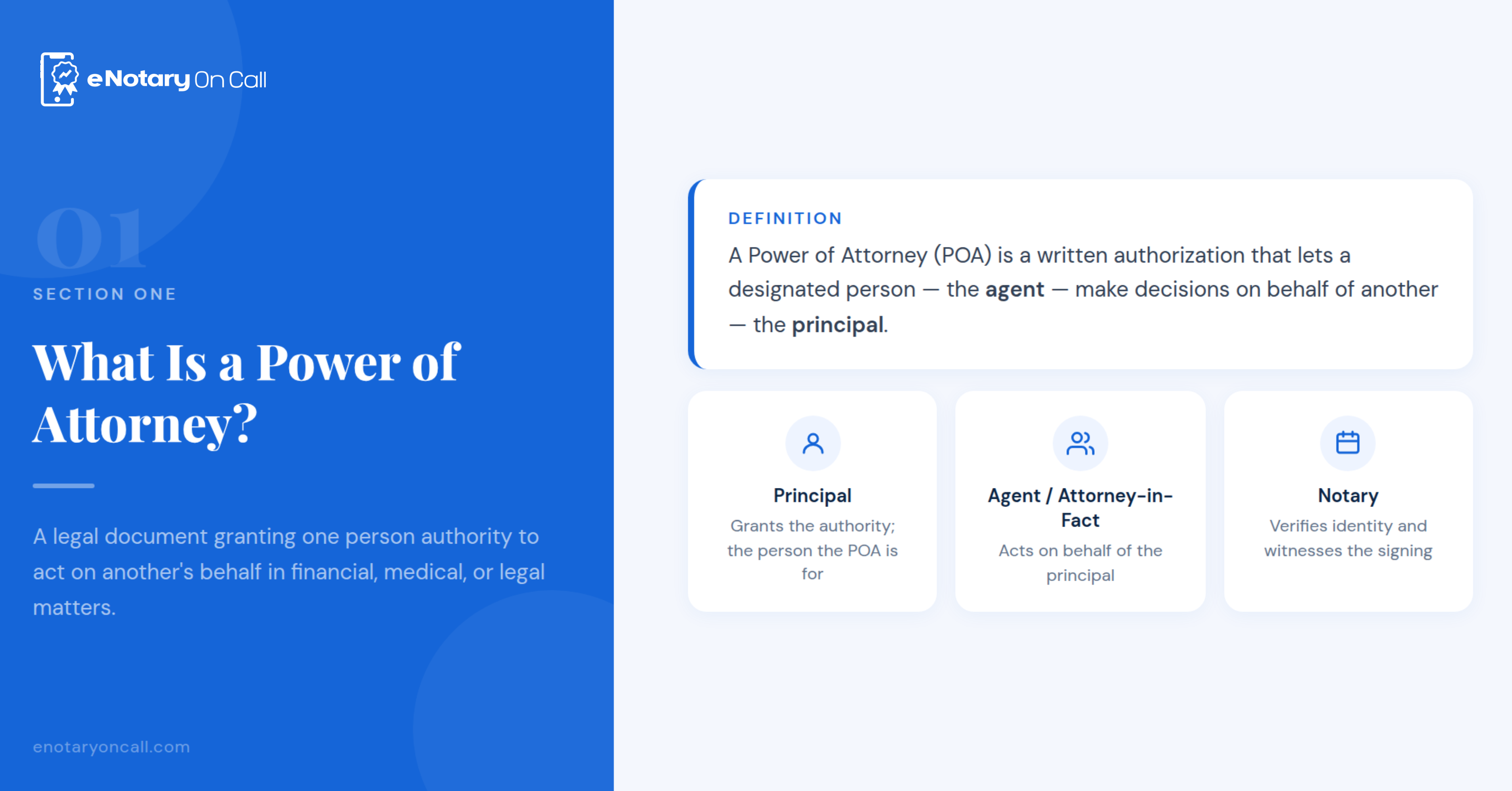
A Power of Attorney (POA) is a legal document that allows one person (the agent) to act on behalf of another person (the principal). Depending on the document, the agent may be authorized to –
- Handle finances
- Sign legal documents
- Manage property
- Make healthcare decisions
- Conduct transactions
- Handle business matters
But simply creating the document does not automatically mean institutions will honor it.
Key Insight: A Power of Attorney only works if it is properly executed and accepted by the organizations that need to rely on it.
Do You Need a Notary for a Power of Attorney?
The short answer is yes, but not always because of state laws. Some states legally require notarization for certain POAs. And banks and organizations require notarized POAs even if state law does not.
Why It Matters: People often focus only on legal requirements and forget practical requirements. A technically valid POA that nobody accepts creates the same problem as not having one.
When Notarization Is Commonly Required?
The requirements vary for different types of POAs, but notarization is commonly expected for –
- Financial Power of Attorney – It is generally used for banking, investments, loans, or asset management. Banks frequently require notarization before granting account access.
- Durable Power of Attorney – It is used for incapacity planning and long-term financial management. Notarization is commonly expected, since these documents carry substantial authority.
- Real Estate Power of Attorney – It is often required for property transfers, closing documents, or recording with county offices. Real estate transactions often have stricter execution standards than general legal documents.
- Medical Power of Attorney – Healthcare providers may require notarization or witnesses, depending on state rules.
When a POA May Not Require Notarization
There are situations in which notarization may not be legally mandatory. Examples may include –
- Limited authority documents
- Internal family arrangements
- State-specific exceptions
However, institutions can still impose additional standards.
Pro Tip: Proactively completing notarization can prevent future delays, even when notarization is optional.
Why Institutions Prefer Notarized Power of Attorney Documents
Many people think that if the law does not require notarization, they don’t need it. Unfortunately, that’s not always true. Organizations prefer notarized documents because they help verify identity, reduce fraud, confirm voluntary signing, and create stronger evidence. So, notarization protects not just the principal but also everyone involved.
What Does a Notary Actually Do?
The common misconception is that a notary approves the contents of the POA. They do not. A notary generally verifies identity, confirms willingness to sign, witnesses signatures, and applies certification. They do not give legal advice, approve authority granted, or evaluate the fairness of decisions.
How to Notarize a Power of Attorney?
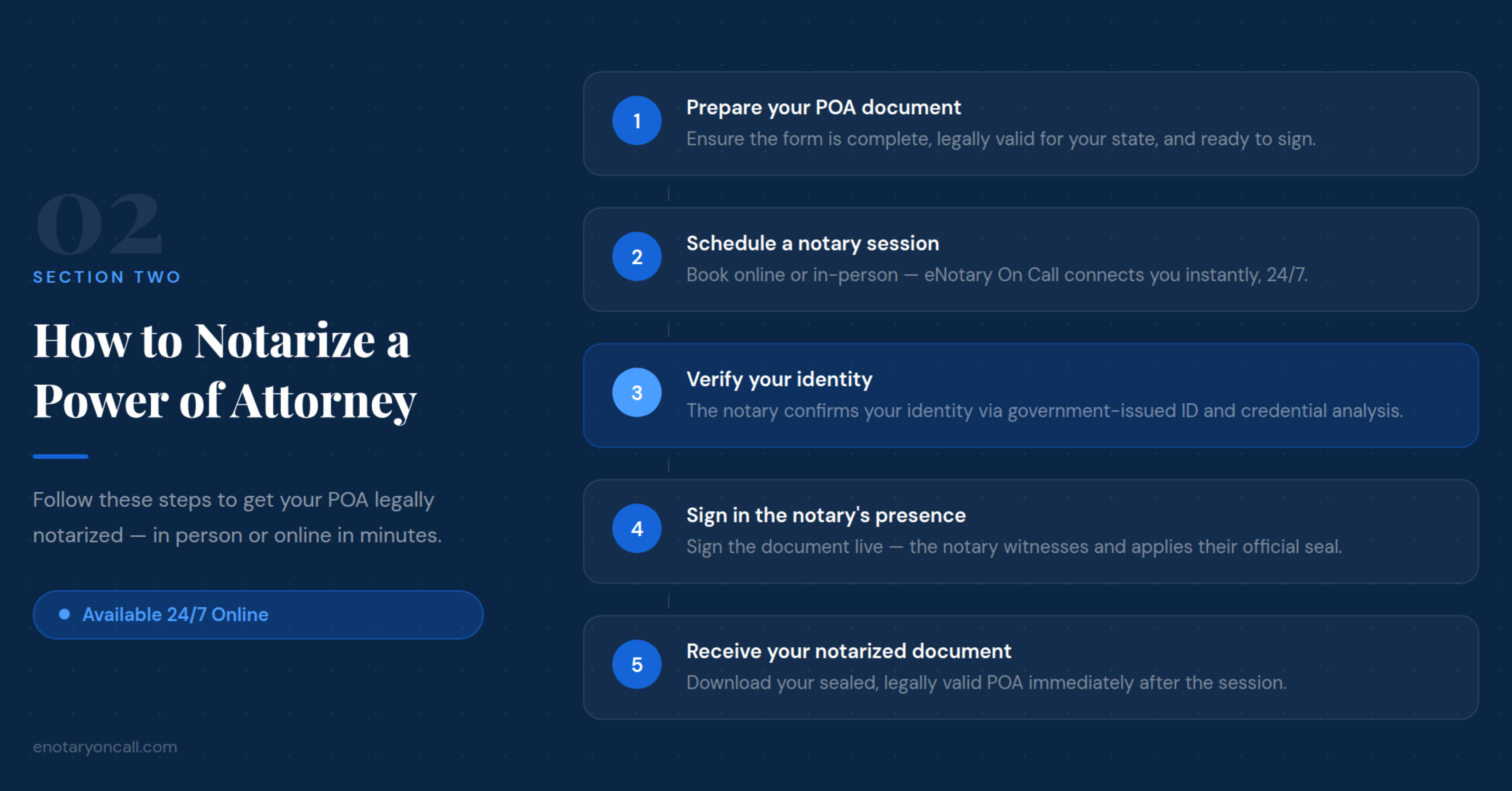
The process is usually straightforward if your POA needs notarization.
Step 1 – Complete the Document
Prepare principal information, agent details, power granted, and signature sections. Do not sign yet.
Step 2 – Check State Requirements
Confirm whether your state requires only a notary, witnesses, or both. Execution errors are among the most common reasons POAs get rejected.
Step 3 – Bring Valid Identification
Common IDs include a driver’s license, passport, or state-issued ID. Names should match exactly.
Step 4 – Sign in Front of the Notary
The notary will verify identity, witness signatures, and complete notarization. Signing early may invalidate the process.
Step 5 – Store and Share Copies
After notarization, keep the originals secure, provide copies to agents, and notify institutions if needed.
Can You Notarize a Power of Attorney Online?
In many situations, yes. Online notarization has become increasingly popular because it allows people to complete legal documents without visiting an office. The process typically works like this with eNotary on Call –
- Create your account
- Upload the completed POA
- Verify identity
- Meet with a commissioned notary
- Sign during a live video session
- Download your notarized document
Pro Tip: Online notarization can be especially helpful for elderly individuals, caregivers, remote families, and urgent transactions.
Common Mistakes That Cause POAs to Be Rejected
- Signing Before the Appointment – The notary must usually witness the signature.
- Using Outdated Forms – Old templates may no longer meet current standards.
- Forgetting Witness Requirements – Some states require witnesses in addition to notarization.
- Giving Incomplete Authority – Unclear language can limit usefulness later.
- Assuming All Institutions Have the Same Rules – Acceptance standards vary widely.
Final Thoughts
If you’re confused and asking yourself, “Do I need a notary for a Power of Attorney?”, the safest answer is usually yes. Notarization adds credibility, improves acceptance, reduces fraud concerns, and helps ensure your document actually works when you need it.
Getting the signing process right matters just as much as writing the document itself, whether you are preparing a financial POA, medical POA, durable POA, or real estate authorization. And completing notarization can be one of the simplest parts of the process with eNotary on Call. You can do it without appointments, unnecessary travel, or waiting days to get started.
Frequently Asked Questions
1. Is a Power of Attorney valid without notarization?
Sometimes, yes, but validity and acceptance are not always the same thing. A document may technically satisfy state requirements but still be rejected by banks, lenders, or healthcare providers that expect notarization.
2. Why do banks often require notarized POAs?
Banks handle sensitive financial transactions and want stronger identity verification before granting account access. A notarized POA helps reduce the risk of fraud and gives institutions greater confidence in the document’s authenticity.
3. Does every type of Power of Attorney require a notary?
No. Requirements vary depending on the type of POA and state law. Financial, durable, and real estate POAs are more likely to require notarization, while some medical or limited POAs may rely on witnesses instead.
4. Can I notarize a Power of Attorney online?
In many situations, yes. Remote online notarization allows individuals to complete the process through secure identity verification and live video sessions without traveling. Services like eNotary On Call make notarization faster and more convenient for many users.
5. What happens if my Power of Attorney is signed incorrectly?
Improper execution may delay transactions, lead to rejection by institutions, or create uncertainty during emergencies. Fixing the problem often requires preparing and signing a new document. Following execution requirements from the beginning saves significant time later.