
 by
by An Income Declaration Affidavit is a sworn legal statement that outlines an individual’s earnings, financial sources, and sometimes expenses. It is commonly used in court proceedings, loan applications, immigration filings, child support matters, rental agreements, and financial disclosures.
Accuracy and proper notarization are essential as this is a sworn document. An incorrectly prepared affidavit can be rejected, delayed, or even lead to legal consequences if it contains false information. Here’s a guide that walks you through the process of preparing an income declaration affidavit step by step, clearly and correctly.
What Is an Income Declaration Affidavit?
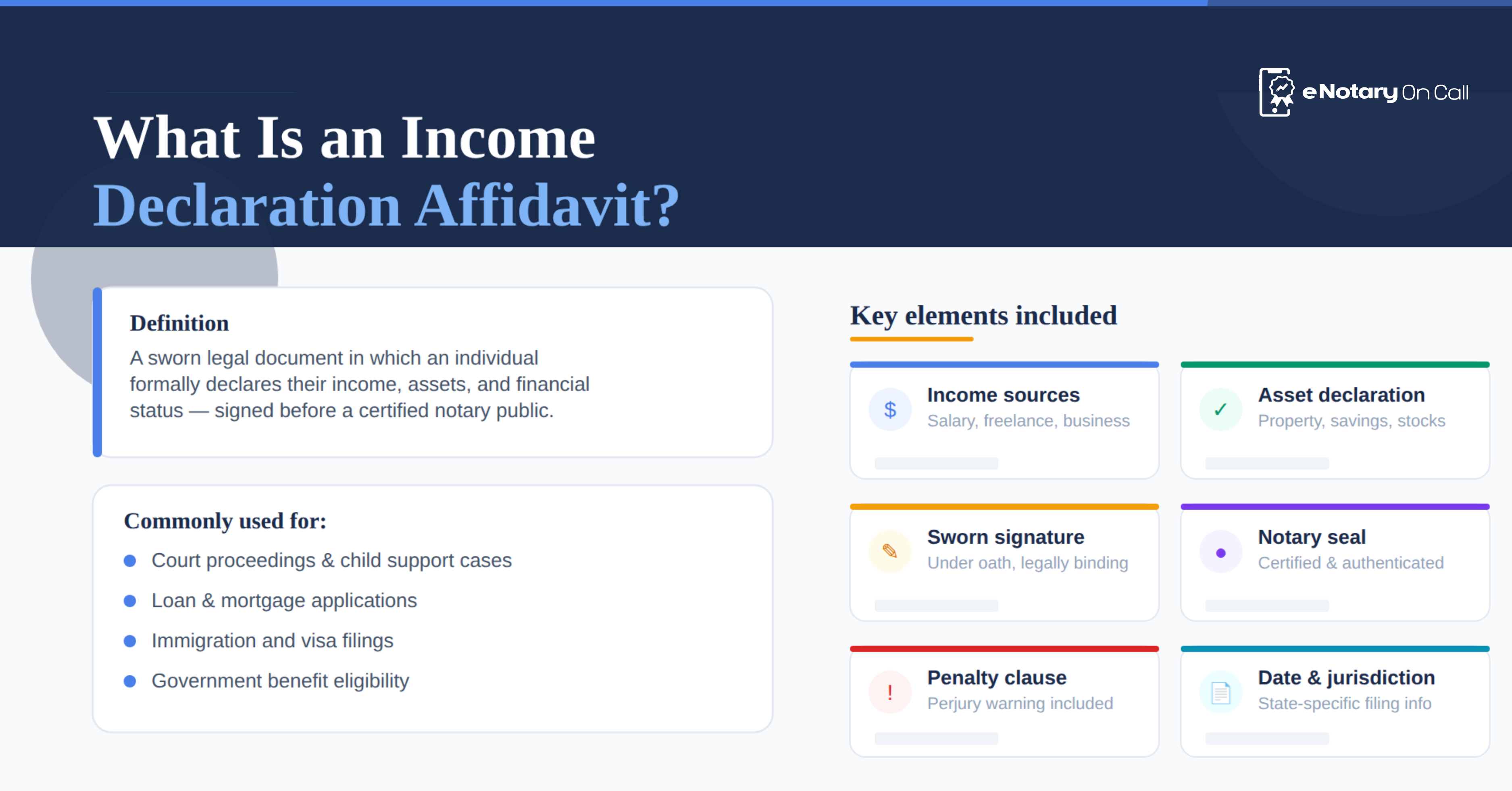
An Income Declaration Affidavit is a written statement made under oath that discloses a person’s income. It may include employment income, self-employment income, rental income, investment income, government benefits, and other sources of earnings.
The person signing the affidavit (the “affiant”) swears that the information provided is true and accurate to the best of their knowledge. It must be notarized to carry legal weight because the statement is sworn.
When Is an Income Declaration Affidavit Required?
This affidavit is often required in situations involving financial evaluation, such as –
- Divorce or child support proceedings
- Alimony disputes
- Loan or mortgage applications
- Visa and immigration sponsorship
- Court-ordered financial disclosure
- Rental or housing verification
Each situation may have specific formatting or supporting documentation requirements.
Key Insight: An Income Declaration Affidavit is a legally binding sworn statement, not just a financial summary. Any misrepresentation can lead to penalties for perjury.
Step 1: Use the Correct Format
Always confirm before drafting your affidavit –
- A court-specific template is required
- A lender has a prescribed form
- An immigration agency requires specific language
If no official template exists, your affidavit should include the title, your full legal name, and address, a clear statement declaring you are swearing under oath, a detailed breakdown of income sources, a declaration of truth, a signature line, and a notary section.
Step 2: List All Sources of Income
Your affidavit should include a complete breakdown of income sources. Be specific and transparent. Everything, including salary or hourly wages (include employer name), freelance or business income, rental property earnings, social security or disability benefits, pension payments, child support received, and investment dividends. You may also include average monthly income if required.
Why It Matters: Incomplete disclosure can damage credibility in court or result in application rejection. Transparency builds trust and legal validity.
Step 3: Attach Supporting Documentation (If Required)
Some institutions require proof, such as pay stubs, tax returns, bank statements, benefit award letters, and profit-&-loss statements. Supporting documents strengthen its reliability, while the affidavit itself is a sworn statement.
Step 4: Write a Clear Declaration Statement
Your affidavit should include a statement like, “I declare under penalty of perjury that the foregoing information is true and correct to the best of my knowledge.” This language reinforces the document’s seriousness.
Step 5: Do Not Sign Before Notarization
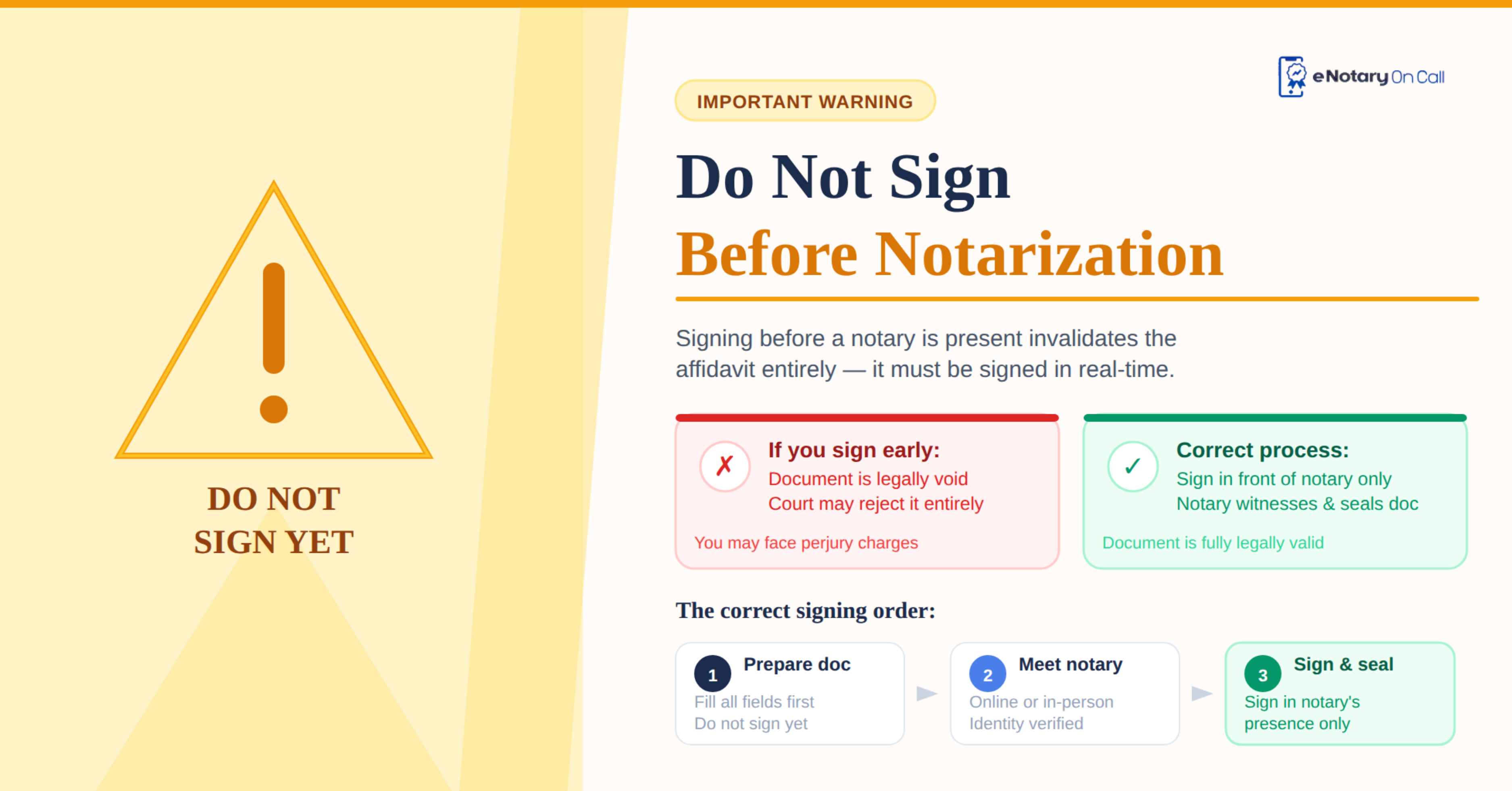
This is a very common mistake that people often make. An income declaration certificate must be signed in the presence of a notary because it is a sworn statement. The notary may refuse to proceed if you sign beforehand, especially in remote notarization states.
Pro Tip: Prepare the document fully, but leave the signature blank until your notarization session begins.
Step 6: Notarize the Affidavit Properly
The final step is notarization. This confirms your identity and that you signed it voluntarily under a properly administrated oath. You can notarize the affidavit in person or, in many states, remotely.
Platforms such as eNotary On Call allow you to connect with a commissioned notary through a secure audio-video session if remote notarization is permitted in your state. This is especially helpful if you cannot travel or need expedited processing. Proper notarization ensures that the affidavit is legally enforceable.
Common Mistakes to Avoid
- Omitting secondary income sources
- Using vague income estimates
- Failing to attach the required proof
- Signing before meeting the notary
- Using outdated information
Should You Include Expenses?
Some affidavits require not just income, but expenses such as rent or mortgage payments, utilities, childcare costs, and debt obligations. Include expense details clearly if the requesting authority asks for a financial disclosure rather than an income-only declaration.
Key Insight: Providing accurate expense details may affect court decisions in child support or alimony cases. Incomplete disclosure may harm your position.
What Happens If You Provide False Information?
Submitting false income details in a sworn affidavit can result in –
- Perjury charges
- Court sanctions
- Financial penalties
- Damage to credibility
When to Seek Legal Advice
If your affidavit is a part of divorce proceedings, immigration sponsorship, or court-ordered financial disclosure, you may need to seek legal advice. Consulting with an attorney may be wise to ensure full compliance.
Key Takeaways: An Income Declaration Affidavit is a sworn legal document that must accurately reflect your income sources. It requires careful preparation, full disclosure, and proper notarization. Courts, lenders, and agencies rely on the truthfulness of the information provided. Using a compliant notarization method, whether in person or through a secure platform like eNotary On Call, ensures the affidavit carries legal validity. Accuracy, transparency, and procedural compliance are essential to avoid delays or legal consequences.
Conclusion
Preparing an Income Declaration Affidavit requires more than simply listing numbers. It involves legal responsibility, accuracy, and proper notarization. Credibility matters whether the affidavit is used in court, for immigration filings, or financial applications.
You can ensure your affidavit is legally sound and accepted without unnecessary delays by carefully preparing your statement, attaching required documentation, and completing notarization properly, either in person or through a secure service like eNotary On Call. Precision protects you when it comes to sworn financial statements.
Frequently Asked Questions
What is an Income Declaration Affidavit used for?
An Income Declaration Affidavit is used to formally disclose your income under oath. It is commonly required in court proceedings, immigration matters, loan applications, and financial disclosures. Because it is a sworn statement, accuracy and notarization are critical for acceptance.
Does an Income Declaration Affidavit have to be notarized?
Yes, in most cases, it must be notarized because it is a sworn affidavit. Notarization confirms your identity and that you signed voluntarily under oath. Without notarization, the document may not be legally recognized.
Can I prepare my own Income Declaration Affidavit?
Yes, you can draft your own affidavit if no official template is required. However, you must include a proper declaration statement and ensure that all required income sources are disclosed. Errors or omissions may lead to rejection.
Can I notarize my Income Declaration Affidavit online?
In states that permit remote online notarization, you may notarize your affidavit online. Platforms such as eNotary On Call provide secure, legally compliant sessions with commissioned notaries, allowing you to complete the process remotely.
What happens if my income changes after I file the affidavit?
If your income changes significantly and the affidavit is being used in an ongoing legal proceeding, you may be required to submit an updated affidavit. Courts and agencies expect financial disclosures to reflect current and accurate information.

Anjali is a Senior Content Writer at eNotary On Call, specializing in online notarization, legal documentation, and compliance, helping readers navigate important processes with ease and confidence. Outside of work, Anjali enjoys traveling, cooking, and reading.