
 by
by A single-member LLC operating agreement feels unnecessary when you are the only owner. Who are you going to argue with, yourself? That is exactly what most solo founders think, and it is exactly why so many of them end up exposed when a bank, a court, or the IRS starts asking questions.
Here is the short answer: yes, you need one. Five states legally require it, banks routinely ask for it, and without it, the liability protection you formed your LLC for can crumble in court.
Entrepreneurship in the U.S. is booming. According to the U.S. Census Bureau, Americans filed a record 5.5 million new business applications in 2023, after topping 5 million in both 2021 and 2022. A huge share of those are one-person LLCs, yet many solo founders skip the one document that proves their business is a real, separate legal entity.
Let’s break down why it matters even when you are flying solo, and how tools like eNotary On Call make finalizing your paperwork easy.
What Is an LLC Operating Agreement?
An LLC operating agreement is an internal legal document that defines how your limited liability company is owned, managed, and run. It covers ownership percentages, management structure, capital contributions, profit distribution, and what happens if the business dissolves or the owner dies.
If you have ever typed what is an LLC operating agreement into Google at 2 a.m. while setting up your business, you are not alone. It is one of the most searched formation questions. Unlike your Articles of Organization, an operating agreement LLC document is not filed with the state. It lives in your records, but it carries serious legal weight.
Think of it this way: your Articles of Organization tell the state your LLC exists. Your operating agreement for LLC purposes tells everyone else, banks, courts, the IRS, exactly how it works.
Do Solo Founders Really Need a Single-Member LLC Operating Agreement?

Yes. Even with one owner, a single-member LLC operating agreement is your strongest evidence that your business and your personal finances are genuinely separate. The U.S. Small Business Administration recommends every LLC create one, even in states where it is optional.
Here is the uncomfortable truth. The IRS treats single-member LLCs as disregarded entities, meaning your business income flows straight to your personal return. Convenient at tax time, but it also means your LLC can look an awful lot like a sole proprietorship from the outside.
If a creditor sues you and convinces a court that your LLC is just you wearing a business costume, the judge can pierce the corporate veil. Translation: your personal savings, car, and even your home could be on the table. A signed operating agreement LLC document is one of the clearest ways to show the court that your company is a legitimate, separately governed entity.
5 Reasons Your Single-Member LLC Operating Agreement Matters

1. It protects your limited liability status
As Thomson Reuters notes, without an operating agreement, your organization risks resembling a sole proprietorship, where the owner has no personal asset protection at all.
2. Banks will ask for it
Most banks request an LLC operating agreement form before opening a business bank account. No agreement often means no account, which means commingled funds, which weakens your liability shield even further.
3. It overrides your state’s default rules
No operating agreement? Your state’s generic LLC statute decides everything for you, including what happens to your business if you become incapacitated or pass away. Your single-member LLC operating agreement lets you write your own rules instead.
4. Lenders, investors, and title companies expect it
Buying property under your LLC? Title companies frequently ask to see the agreement. Applying for a business loan or credit? Same story.
5. It creates a succession plan
You are the only member. If something happens to you, who takes over? Without written instructions, your family could face a legal mess. Your agreement can name a successor and keep the business alive.
Which States Require an Operating Agreement for LLC Owners?
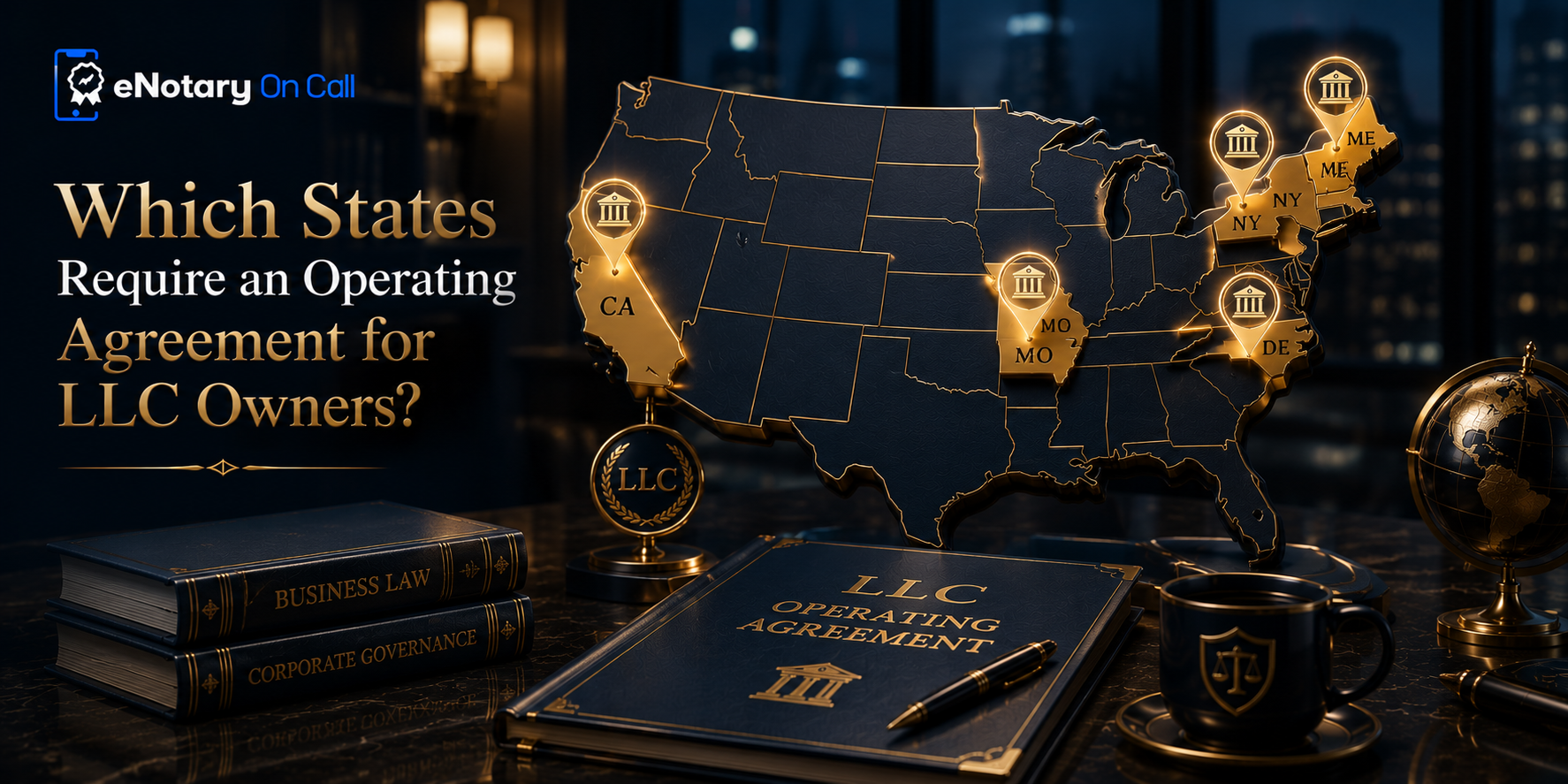
Five states legally require LLCs to have an operating agreement:
- California requires one, written or oral, with written agreements kept in company records
- New York requires a written operating agreement, adopted within 90 days of formation
- Missouri requires at least an oral agreement covering business conduct and member duties
- Maine requires one, though it can be oral, written, or implied
- Delaware requires one by statute, and it can also be written, oral, or implied
Even in these states, you never file the document with the Secretary of State. You simply keep it with your records. In the other 45 states, an operating agreement for LLC compliance is technically optional, but as we covered above, optional and safe to skip are very different things.
What to Include in Your LLC Operating Agreement Form
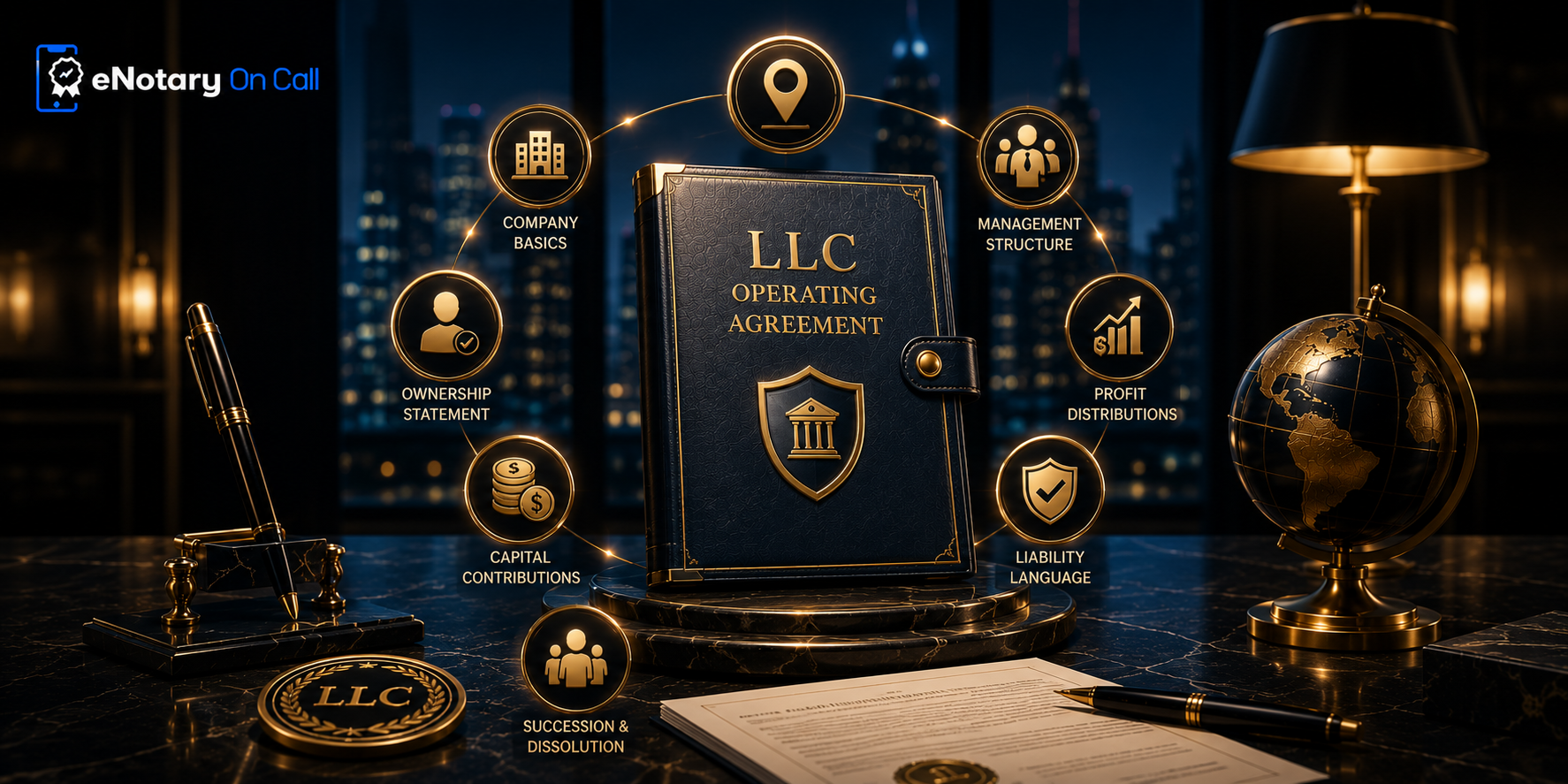
You do not need a 40-page monster. A solid LLC operating agreement form for a solo founder typically includes:
- Company basics: legal name, principal address, registered agent, and formation date
- Ownership statement: confirmation that you own 100% of the membership interest
- Management structure: member-managed (you run it) or manager-managed
- Capital contributions: what cash, property, or services you put into the business
- Profit distributions: how and when you pay yourself
- Liability language: a clear statement that the LLC, not you personally, bears business obligations
- Succession and dissolution: who inherits or winds down the company
You can find free and paid LLC operating agreement forms online, through legal template providers, or via a business attorney. Whichever route you choose, make sure your operating agreement LLC template matches your state’s statute, then sign and date it. For extra credibility with banks and courts, many founders also get it notarized.
Do You Need to Notarize Your Operating Agreement? Here Is Where It Gets Easy
Most states do not require notarization for an LLC operating agreement. But here is what experienced founders know: a notarized agreement carries a verified date and identity, which is powerful evidence if anyone ever challenges when the document was created or whether you actually signed it.
And notarization no longer means driving across town. Remote online notarization (RON) is now legal in the majority of U.S. states, and platforms like eNotary On Call connect you with a commissioned notary over secure video in minutes.
This matters beyond your operating agreement, because running an LLC generates a steady stream of documents that genuinely do require notarization:
- Transferring property into your LLC? You can notarize a quitclaim deed online instead of scheduling an in-person appointment. Solo founders who move rental properties into their LLC use this constantly.
- Authorizing someone to act for your business? You can notarize a power of attorney online in a single video session, which is a lifesaver if you travel or manage the business remotely.
- Doing business internationally? If a foreign partner or government needs authenticated U.S. documents, eNotary On Call can help you notarize apostille-bound paperwork online and guide you through the authentication process.
Location is no barrier either. Whether you need an online notary Florida businesses rely on for real estate and LLC filings, or an online notary Texas founders use for deeds and powers of attorney, remote notarization works across state lines.
Florida and Texas were both early adopters of RON laws, which is why an online notary Florida session or an online notary Texas appointment is fully valid for most business documents today.
How eNotary On Call Fits Into a Solo Founder’s Workflow?
Picture this: you finish your single-member LLC operating agreement in Florida on a Tuesday night. Instead of hunting for a notary on Wednesday, you upload it to eNotary On Call, verify your ID, meet a licensed notary on video, and sign electronically. Done in under 15 minutes.
The same platform handles the documents that come later in your business journey.
Need to notarize a quitclaim deed online to move your home office property under the LLC?
Covered.
Need to notarize a power of attorney online so your spouse can sign while you are overseas?
Covered.
Need to notarize apostille documents online for an international contract?
Also covered.
For a one-person business where you are the CEO, accountant, and errand-runner all at once, that time savings is not a luxury. It is survival.
Also Read – 7 Most Common Mistakes in LLC Operating Agreements to Avoid
Conclusion
A single-member LLC operating agreement is not busywork. It makes your liability protection real, keeps banks and courts on your side, and puts you, not your state’s default statute, in control of your business.
Draft it this week. Sign it. And when your paperwork needs a notary, skip the road trip. Book a session with eNotary On Call and get your documents notarized online from wherever you are building your business.
FAQs: Single-Member LLC Operating Agreement
1. What is an LLC operating agreement?
An LLC operating agreement is an internal document that sets the ownership, management rules, and financial arrangements of a limited liability company. It is not filed with the state, but it legally governs how the business operates and helps prove the LLC is separate from its owner.
2. Is a single-member LLC operating agreement legally required?
Only in California, New York, Missouri, Maine, and Delaware. New York even requires a written agreement within 90 days of formation. Everywhere else it is optional but strongly recommended by the SBA, banks, and business attorneys.
3. Where can I get LLC operating agreement forms?
You can download LLC operating agreement forms from legal template websites, state bar resources, or online formation services, or have an attorney draft a custom one. Always confirm the template matches your state’s LLC statute before signing.
4. Can I notarize a quitclaim deed online for my LLC?
Yes. In states that permit remote online notarization, you can notarize a quitclaim deed online through a platform like eNotary On Call. It is a common step when founders transfer real estate into their LLC.
5. Can I notarize a power of attorney online?
Yes. Most RON-friendly states allow you to notarize a power of attorney online via a secure video session with a commissioned notary, complete with identity verification and a digital seal.
6. Can I notarize apostille documents online?
Yes. You can notarize apostille-related documents online through a RON platform, then submit them to your Secretary of State for the apostille certificate needed for international use.
7. Does an online notary in Florida or Texas work for LLC documents?
Yes. Both states have established remote notarization laws, so an online notary Florida or online notary Texas session is valid for operating agreements, deeds, and powers of attorney.