
 by
by Remote notarization has completely changed how legal documents are executed across the United States. The framework governing both traditional and remote notarization in Pennsylvania falls under the Revised Uniform Law on Notarial Acts (RULONA).
So, it is important to understand how a Pennsylvania Remote Notary works, what RULONA allows, and what it requires.
What Is RULONA?

RULONA stands for the Revised Uniform Law on Notarial Acts. Pennsylvania adopted its version of RULONA to modernize notary practices and introduce remote notarization capabilities. The law governs –
- Traditional notarizations
- Electronic notarizations
- Remote online notarizations (RON)
- Identity verification standards
- Notary registration and compliance
When properly executed, RULONA ensures that remote notarizations carry the same legal validity as in-person notarizations. Online notaries who want to receive remote notarization opportunities can create a notary account and complete the platform onboarding process.
What Is a Pennsylvania Remote Notary?

A Pennsylvania Remote Notary is a commissioned Pennsylvania notary public who has completed additional registration and authorization to perform notarizations using communication technology. This means the signer does not need to be physically present, and the notarization occurs through secure audio-video communication.
The notary verifies identity using approved methods, and a digital notarial certificate is applied at the end. Remote notarization is legally recognized under Pennsylvania law when conducted in compliance with RULONA requirements.
How RULONA Changed Pennsylvania Notary Law
Notarization required physical presence before modernization. RULONA introduced provisions allowing –
- Electronic signatures
- Digital notarial seals
- Remote identity verification
- Audio-video session recording
- Secure document retention
Key Insight: RULONA did not simply “allow Zoom notarization.” It created a structured compliance framework that ensures remote notarizations are secure, verifiable, and legally enforceable.
Key Requirements Under RULONA
To perform remote notarizations legally, a Pennsylvania Remote Notary must –
1. Hold an active Pennsylvania notary commission.
2. Notify the Department of State of the Intent to perform remote notarizations.
3. Use approved communication technology.
4. Verify identity through credential analysis and knowledge-based authentication (when required).
5. Record and retain the session for the statutory retention period.
6. Apply a compliant electronic signature and seal.
7. Notarization can be invalidated if you fail to follow these requirements.
Identity Verification Standards
RULONA sets strict identity verification standards for remote notarization. A notary must confirm the identity through a government-issued photo ID, credential analysis (automated verification), or a knowledge-based authentication (KBA), when applicable.
This multi-layered verification often provides stronger documentation than traditional in-person notarization.
Why It Matters: Identity fraud is one of the primary risks remote notarization laws aim to prevent. RULONA’s layered verification protects both the signer and third parties relying on the document.
What Documents Can Be Notarized Remotely in Pennsylvania?
Most documents that can be notarized in person can also be notarized remotely, including affidavits, real estate documents, powers of attorney, business agreements, estate planning documents, and contracts.
However, certain documents may require additional compliance depending on state or federal rules. Always confirm with the receiving institution whether special requirements apply.
Are Pennsylvania Remote Notarizations Accepted in Other States?
Generally, yes. A properly executed Pennsylvania remote notarization is typically recognized in other states under principles of interstate recognition. The key is compliance. The notarization carries legal authority if it meets Pennsylvania’s RULONA requirements.
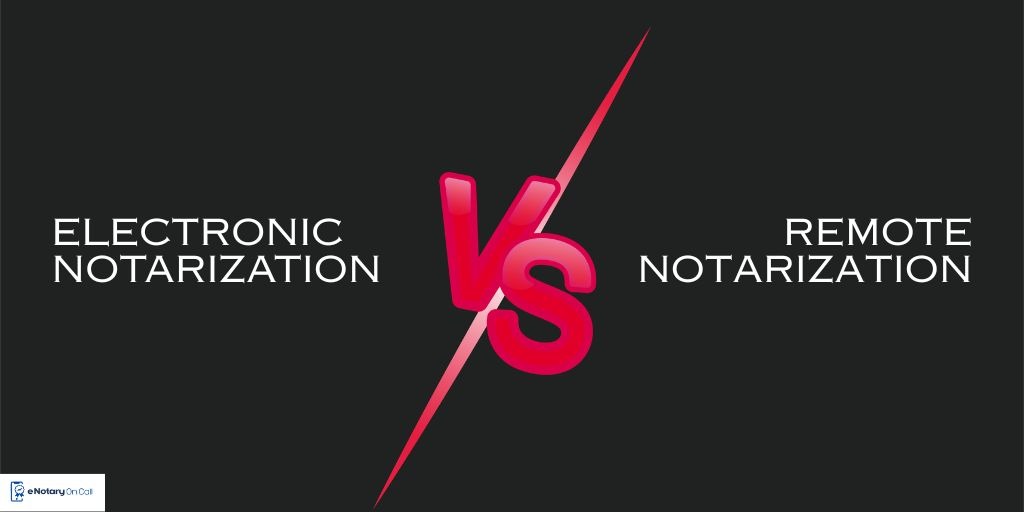
Electronic vs Remote Notarization
It’s important not to confuse the two terms. In electronic notarization, the signer and notary are physically together, but the document is signed electronically.
In remote notarization, the signer and the notary are in different locations and communicate via approved technology.
Key Insight: All remote notarizations are electronic, but not all electronic notarizations are remote.
Recording and Retention Requirements
Pennsylvania law requires remote notarization sessions to be recorded and stored for a defined period (often several years). The recording must capture identity verification, oath administration, the signing process, and the notary’s confirmation.
These recordings provide evidentiary protection in case of disputes.
Security Measures Required
RULONA requires remote notaries to use secure communication platforms that –
- Provide tamper-evident technology
- Protect document integrity
- Safeguard personal data
- Maintain audit trails
Not all online tools qualify. The platform must meet legal standards.
Pro Tip: Using informal video platforms without compliant technology can invalidate the notarization. Always ensure that the notary uses a legally approved system.
When Might Remote Notarization Be Inappropriate?
Although it is legally permitted, remote notarization may not be ideal when the signer appears confused or vulnerable, or when complex estate matters require in-person clarity. Digital notarization may also be very inappropriate when the receiving agency demands wet-ink signatures.
Traditional notarization may be safer in these cases.
Liability and Enforcement Under RULONA
Notaries remain personally responsible for compliance. Violations can result in commission suspension, civil penalties, administrative fines, and potentially liability exposure.
RULONA modernizes the process but maintains strong accountability standards.
Why RULONA Matters for Businesses?
Businesses in Pennsylvania benefit from remote notarization by –
- Reducing travel time
- Speeding up contract execution
- Supporting remote employees
- Handling interstate transactions efficiently
Remote notarization significantly streamlines operations for real estate and financial industries.
Key Takeaways: Pennsylvania Remote Notary authority is governed by the Revised Uniform Law on Notarial Acts (RULONA), which modernized the state’s notarization framework. Remote notarization is fully legal when the notary complies with identity verification, session recording, and technology standards. When properly notarized, RULONA treats remote notarizations as legally equivalent to in-person notarizations. Strict compliance, secure technology, and accurate documentation are essential to maintaining validity. The law balances convenience with fraud prevention through layered verification requirements.

Conclusion
The Pennsylvania Remote Notary framework under RULONA represents a significant modernization of traditional notarization practices. Pennsylvania has balanced accessibility with legal integrity by authorizing remote online notarization with structured safeguards.
RULONA ensures that remote notarizations are not casual video signings, but carefully regulated acts supported by identity verification, session recording, and secure digital certification. Remote notarization carries the same legal authority as in-person notarizations when performed correctly. Understanding RULONA is essential for anyone relying on remote notarization in Pennsylvania, whether for personal, business, or legal purposes. Compliance is not optional; it is the foundation of validity.
Frequently Asked Questions
1. What is Pennsylvania RULONA?
RULONA is the Revised Uniform Law on Notarial Acts adopted by Pennsylvania. It governs traditional, electronic, and remote notarizations, outlining identity verification, technology requirements, and compliance standards.
2. Is remote notarization legal in Pennsylvania?
Yes. Pennsylvania Remote Notary services are legally authorized under RULONA, provided the notary complies with registration, identity verification, and recording requirements.
3. Does the signer have to be in Pennsylvania?
No. The notary must be physically located in Pennsylvania at the time of notarization, but the signer can be located elsewhere, provided identity verification requirements are satisfied.
4. Are remote notarizations recorded?
Yes. RULONA requires that remote notarization sessions be recorded and retained for a statutory period. This recording serves as legal evidence in the event of a dispute.
5. Can any Pennsylvania notary perform remote notarization?
No. A notary must complete additional registration and comply with RULONA’s technology and procedural requirements before performing remote notarizations.
Helpful eNotary On Call Resources
Need a faster way to complete your notarization? Visit the eNotary On Call homepage to learn how online notarization works, review options for government notarization needs, or explore real estate notarization services. When you are ready, you can create an eNotary On Call account and connect with a commissioned online notary.