
 by
by Planning for the future can be a little complicated, but preparing the right legal documents in advance can make a major difference for both you and your family. Living Will and an Advance Directive are two of the most important healthcare planning documents.
If ever you become unable to communicate your decisions, these documents help ensure that your medical preferences are known and respected. With that comes the most common question: How do I notarize a Living Will or Advance Directive?
The answer depends on your state’s requirements, the type of document, and whether you choose in-person or online notarization. Let’s go through the entire process and explain how services like eNotary On Call can simplify it.
What Is a Living Will?
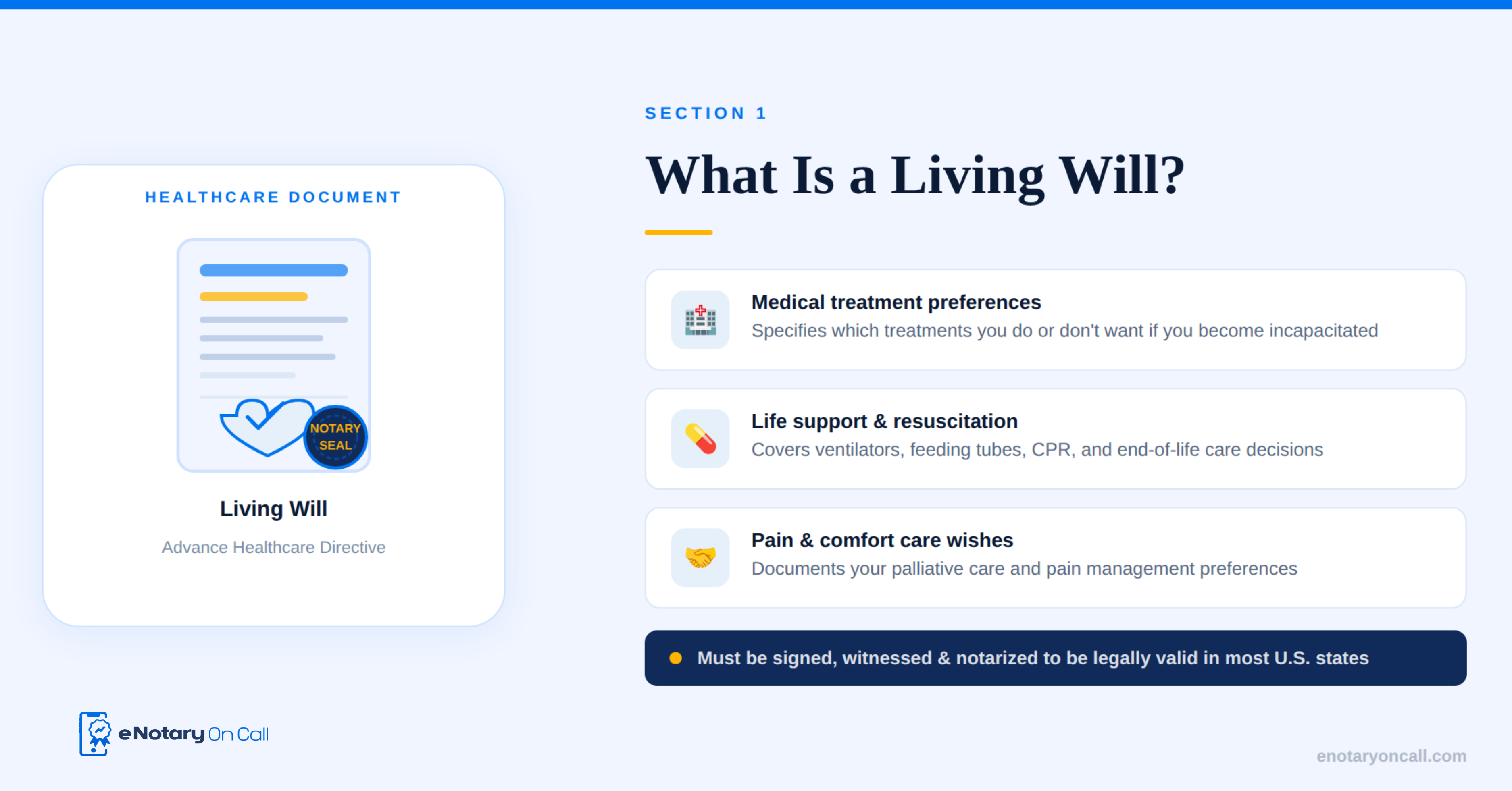
A Living Will is a legal document that explains your preferences for medical treatment if you become unable to communicate. It may include instructions about life-support treatment, artificial nutrition and hydration, resuscitation preferences, pain management, and end-of-life care. A Living Will applies while you are still alive, unlike a regular will.
Key Insight: A Living Will does not appoint someone to make decisions; it communicates your own medical wishes directly.
What Is an Advance Directive?
An Advance Directive is a broader legal document that often combines a living will, healthcare decision-making authority, and medical instructions. Many Advance Directives allow you to appoint a healthcare agent who can make decisions if you cannot.
Why It Matters: Advance Directives help eliminate uncertainty during medical emergencies and reduce the burden on family members who may otherwise have to guess your wishes.
Do Living Wills and Advance Directives Need Notarization?
Most people misunderstand this part of the process. The answer is sometimes, but not always. Requirements vary by state. Some states require notarization, witness signature, both notarization and witnesses, or either notarization or witnesses.
Key Insight: People often assume every healthcare document must be notarized. In reality, some states prioritize witnesses while others permit notarization as an alternative.
Why Notarization Is Recommended Even When Optional
Many people still choose it, even when notarization isn’t legally required. The benefits include greater authenticity, reduced risk of disputes, easier acceptance by institutions, and stronger identity verification.
Why It Matters: Healthcare decisions can become emotional and complicated. A notarized document can reduce questions about authenticity later.
Step-by-Step: How to Notarize a Living Will or Advance Directive
Step 1: Prepare the Document Properly
Complete the document carefully before notarization. Make sure to include the full legal name, medical instructions, healthcare representative details (if applicable), and emergency contacts. Leave signature sections blank.
Pro Tip: Do not sign early. Most notaries require witnessing the signature.
Step 2: Verify State Requirements
Check whether your state requires a notary, witnesses, or both. You should also confirm witness eligibility rules, healthcare provider restrictions, and special signing instructions.
Key Insight: Even if your medical wishes are clearly written, using the wrong execution method can make the document invalid.
Step 3: Gather Identification
Prepare valid identification before the appointment. Common options include a driver’s license, a passport, and a state-issued identification. The name on the ID should match the document.
Step 4: Meet With the Notary
You can choose in-person notarization, which is available through notary offices, law offices, banks, and mobile notaries. Or you can use the available online notarization option, which allows you to complete the process remotely by meeting with them through secure video, avoiding travel and appointments.
Why It Matters: Online notarization has become especially helpful for elderly individuals, caregivers, and people with limited mobility.
Step 5: Sign During the Session
The notary will confirm identity, ensure voluntary participation, witness the signature, and apply the notarial seal.
Key Insight: The notary only verifies the signing process; it does not review your medical choices.
Step 6: Store the Document Safely
Once the document is notarized, keep the copies with your healthcare agent, family, medical providers, and estate planning documents.
Pro Tip: A notarized document only helps if someone can find it when needed.
Can Living Wills and Advance Directives Be Notarized Online?
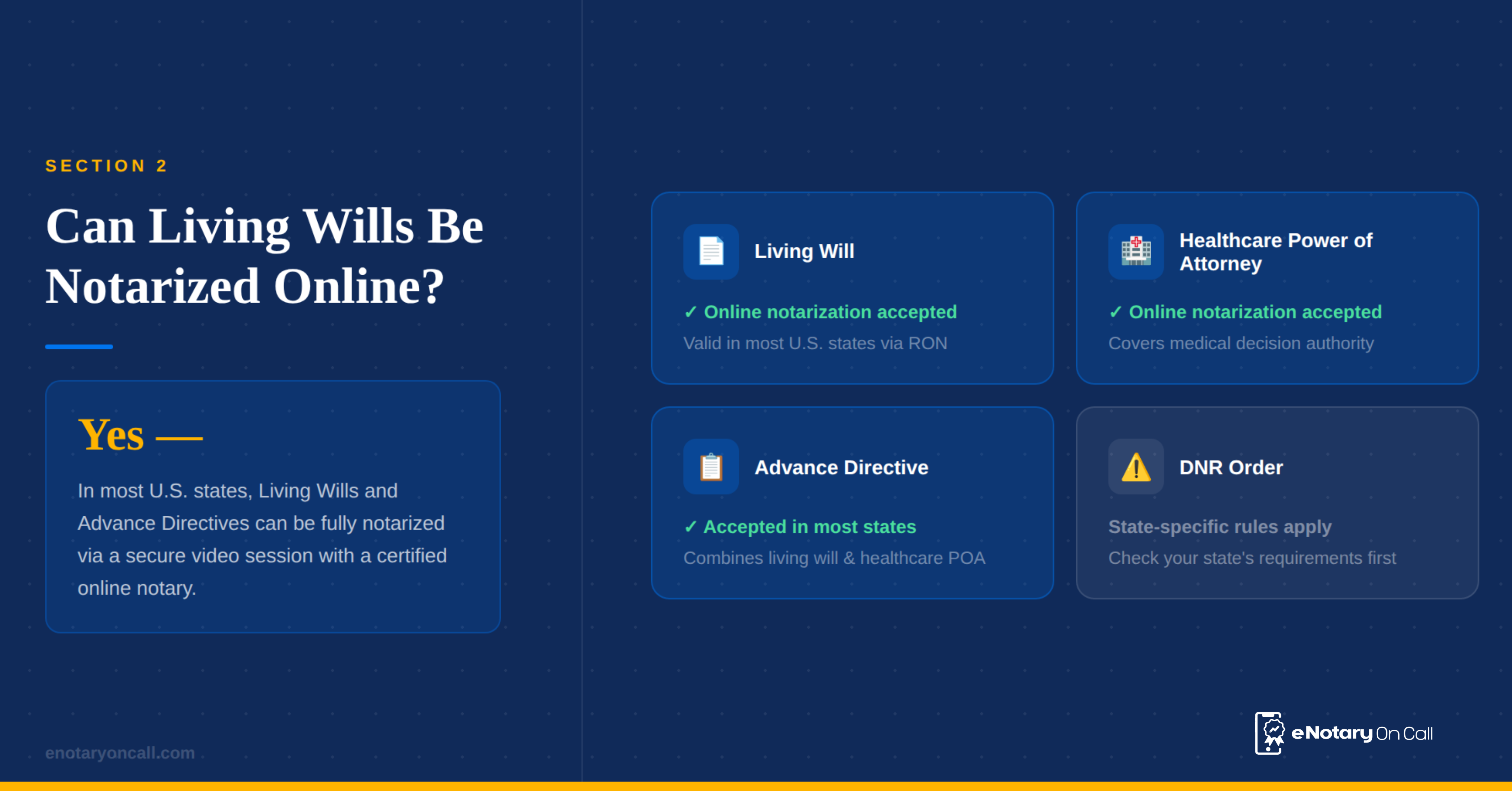
Yes, in most situations. Online notarization offers convenience, accessibility, faster scheduling, and reduced travel. Services like eNotary On Call make the process easier by allowing secure remote signing sessions.
Key Insight: People often postpone advance care planning because they assume the process is complicated. Online notarization removes much of that friction.
Common Mistakes to Avoid
- Signing Before the Appointment -Pre-signing may invalidate the notarization.
- Using the Wrong Witnesses – Some states prohibit healthcare providers, family members, and beneficiaries.
- Leaving Sections Blank – Incomplete documents may create confusion.
- Not Sharing Copies – A perfectly drafted document is useless if nobody knows it exists.
Why It Matters: Healthcare emergencies happen unexpectedly. Proper preparation ensures your wishes remain accessible and enforceable.
Who Should Consider Creating These Documents?
Living Wills and Advance Directives are not just for elderly individuals. They are useful for –
- Adults of any age
- Parents
- Travelers
- People with medical conditions
- Individuals planning their estate
Key Insight: Unexpected medical situations can happen at any age. Advance planning creates clarity during uncertainty.
Why Families Are Choosing eNotary On Call?
More people are choosing eNotary On Call because it offers remote access, flexible scheduling, secure identity verification, and convenient completion from home.
Healthcare planning often gets delayed because people don’t want to coordinate appointments. Online notarization makes the process more accessible.
Key Takeaways: A Living Will and an Advance Directive are important legal tools that communicate your healthcare preferences and provide guidance during medical situations. Although notarization requirements vary by state, notarizing these documents often strengthens their credibility and improves acceptance.
The process involves preparing the document, verifying requirements, presenting identification, signing before a notary, and safely storing completed copies. Services like eNotary On Call make notarization more convenient and accessible, helping individuals complete important healthcare planning without unnecessary delays.
Conclusion
One of the most important parts of healthcare planning is understanding how to have a Living Will or Advance Directive notarized. These documents help ensure your medical preferences are respected and reduce uncertainty for loved ones during difficult moments. Completing these documents now can provide long-term clarity, protection, and peace of mind, whether you choose in-person notarization or a convenient online option like eNotary On Call.
Frequently Asked Questions
1. Does a Living Will always require notarization?
Not always. Requirements vary by state law, and some jurisdictions require witnesses instead of notarization. Even where optional, notarization can provide additional credibility and reduce future disputes.
2. Can I notarize an Advance Directive online?
In many cases, yes. Online notarization allows individuals to complete the process remotely through secure identity verification and live video sessions. Services like eNotary On Call can simplify the experience.
3. Can family members act as witnesses?
That depends on state rules. Some states prohibit family members, healthcare providers, or beneficiaries from serving as witnesses. Always verify local requirements before signing.
4. Can I change my Living Will later?
Yes. As long as you remain legally competent, you can usually update or revoke your Living Will or Advance Directive. It’s important to distribute updated copies afterward.
5. What happens if my document is not notarized correctly?
Improper execution can lead to delays, rejection, or questions about validity during medical situations. Following state requirements and using trusted notarization services can help avoid these problems.