
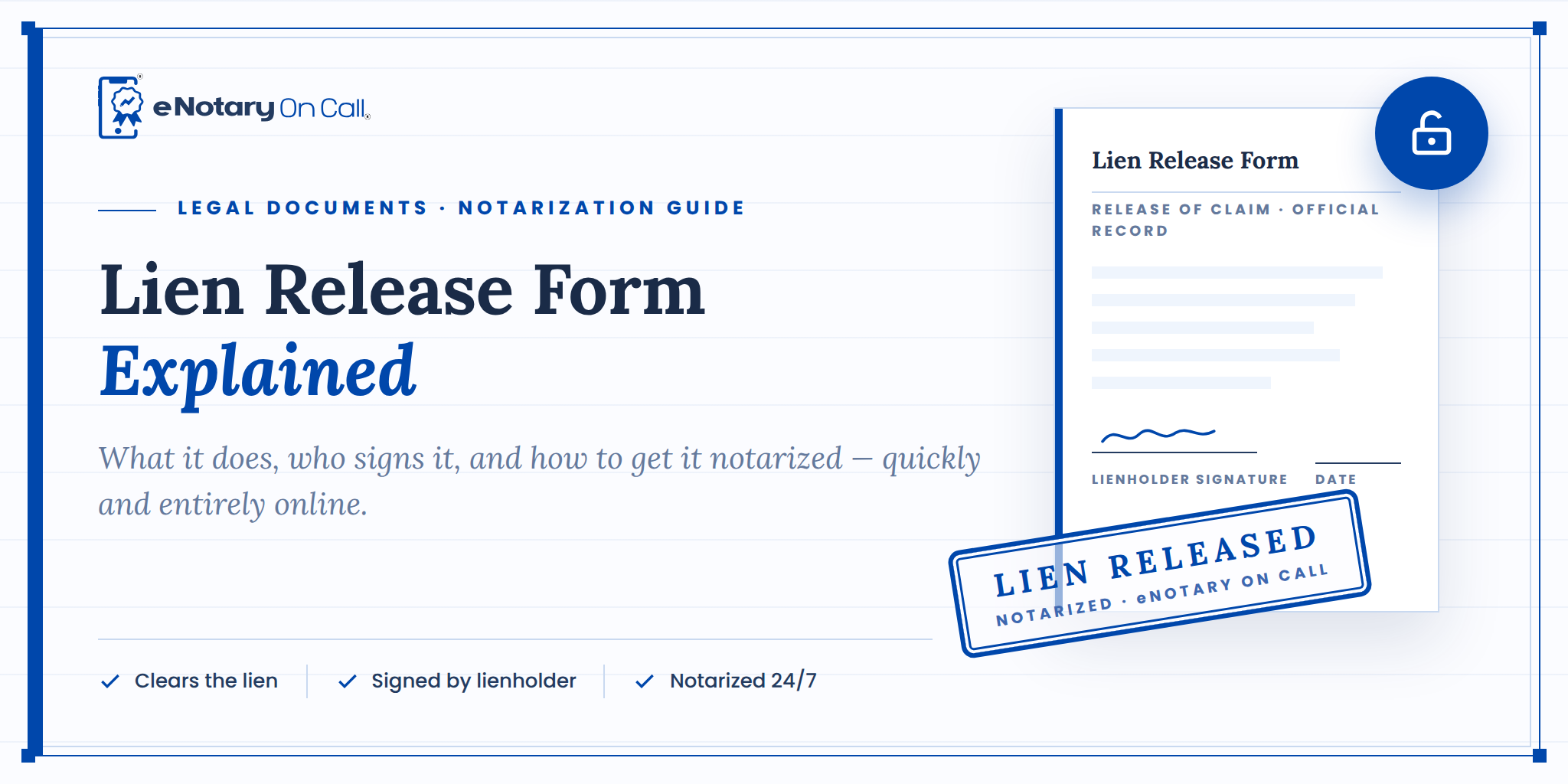
Quick Answer: A Lien release form is a legal document that confirms a debt, obligation, or claim against property has been satisfied and officially released. It is usually signed by the lienholder, not the property owner, and in some situations may require notarization before filing or recording.
That feeling of paying off the debt feels like the finish line. Your loan is paid. The final payment is clear. The obligation is complete. But legally, there may still be one more step left. That step is called the Lien Release Form.
Many people assume that once payment is made, ownership records automatically update themselves. Unfortunately, that is not always how it works. The release document often becomes the proof that the claim no longer exists, whether the lien involves a vehicle, property, contractor payment, judgment, or another financial obligation. That raises a few important questions –
- What exactly does a Lien release form do?
- Who signs it?
- Does it need notarization?
- What happens after it’s completed?
So, let’s walk through the process step by step and explain how to properly complete, notarize, and finalize a lien release.
What Is a Lien Release Form?
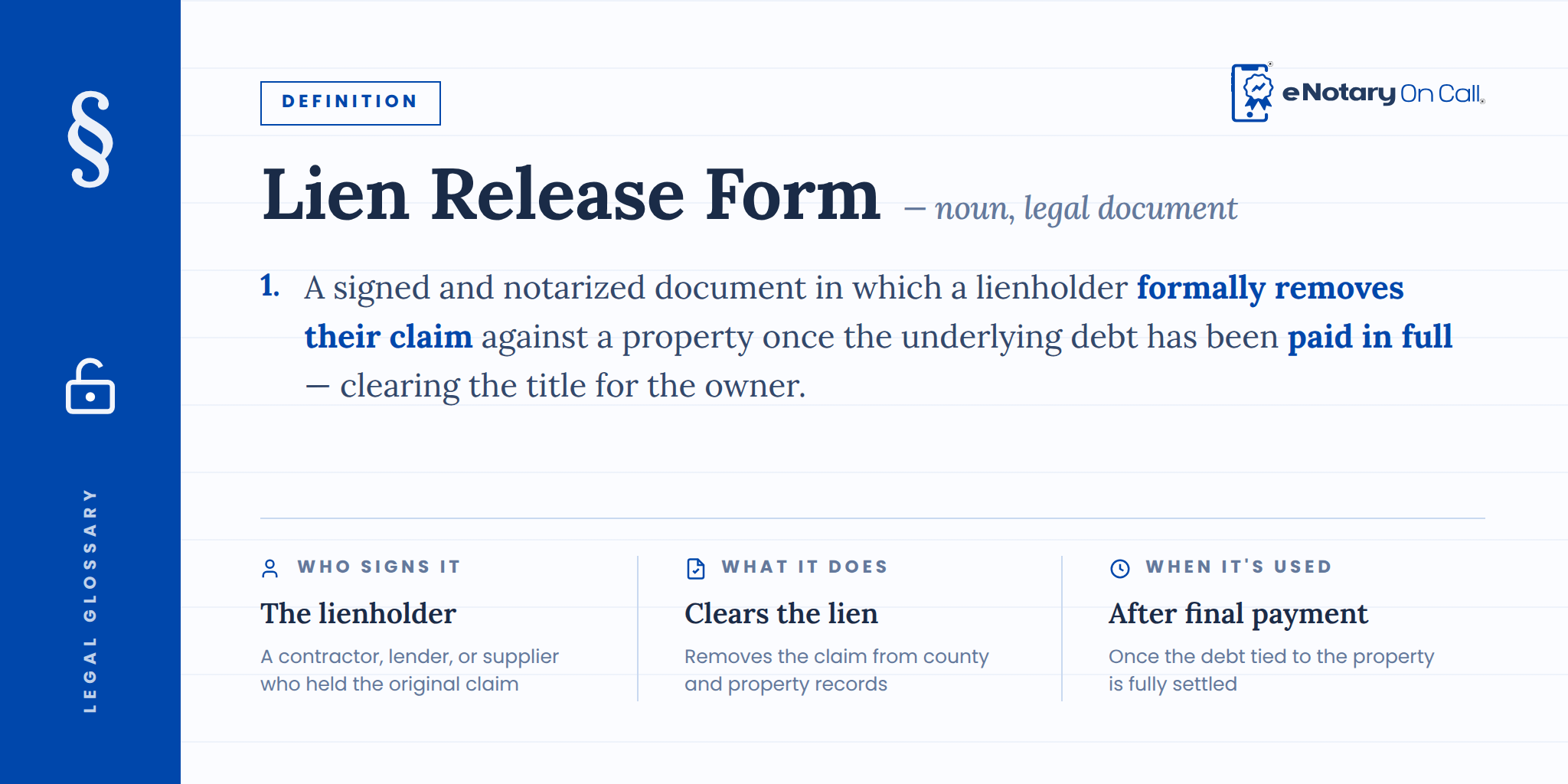
A Lien release form is a legal document used to officially remove a lien from property after the underlying debt or obligation has been satisfied. A lien is a legal claim against property.
That property may include real estate, vehicles, equipment, business assets, or personal property. The release document confirms that the lienholder no longer claims legal rights over the asset.
Key Insight: Paying off a debt and releasing a lien are related, but they are not always the same legal event.
What Does a Lien Release Form Actually Do?
The form serves as formal evidence that:
- Payment obligations were fulfilled
- Claims are withdrawn
- Ownership restrictions are removed
- Public records can be updated
Records may still reflect an active lien without the release.
Why It Matters: People are often surprised to discover that loans may be paid while liens still appear active until proper documentation is completed.
Common Situations Where a Lien Release Form Is Used
Lien releases appear in more situations than most people realize.
- Real Estate Liens – used after the mortgage payoff, property settlements, or judgment satisfaction.
- Vehicle Liens – It is common after an auto loan payoff, a title update, or an ownership transfer.
- Contractor and Construction Liens – used after construction payments, contractor disputes, or project completion.
- Business and Equipment Liens – It is applied when business financing ends or equipment obligations are satisfied.
Key Insight: The underlying debt may change, but the purpose stays the same: to prove the claim is gone.
Who Signs a Lien Release Form?
Who actually signs the release is a very misunderstood part of this process. Typically, the lienholder signs. Examples of lienholders include Banks, lenders, contractors, government entities, or financial institutions.
The property owner usually does not release their own lien. Only the party holding the claim generally has the authority to release it.
What Information Should Be Included in a Lien Release Form?
A complete Lien release form usually contains several important sections.
- Lienholder Information – It includes the legal name, address, and contact details. So, accuracy matters a lot.
- Property or Asset Information – It describes the property address, vehicle details, and asset identification numbers. Specific identification reduces disputes later.
- Debt or Obligation Reference – It includes loan details, contract information, and recording references.
- Release Statement – The document should clearly state that the lien is satisfied, claims are released, and rights are terminated.
- Signature Section – Include authorized signatures, dates, and notarial language where required. Leave signature areas unsigned until execution requirements are confirmed.
How to Complete a Lien Release Form
The process becomes much easier once you understand the document.
Step 1 – Confirm the Obligation Was Fully Satisfied: Before preparing the release, verify –
- Final payment processed
- Outstanding balances cleared
- Conditions fulfilled
Releasing a lien prematurely can create legal complications.
Step 2 – Prepare Supporting Records: Gather payment confirmations, loan records, and existing lien documentation.
Step 3 – Complete the Release Form: Carefully review the names, dates, and asset descriptions. Small administrative errors can delay recording or acceptance.
Step 4 – Execute the Document Properly: Follow local requirements for signatures, witnesses, and notarization.
Does a Lien Release Form Need to Be Notarized?
The answer is sometimes, but the requirements vary. Notarization may help confirm identity, strengthen authenticity, support acceptance for recording, and reduce disputes.
Why It Matters: Notarization often improves acceptance and reliability, even where not legally mandatory.
How to Notarize a Lien Release Form
The process is usually straightforward if notarization applies.
Step 1 – Gather Identification: Examples include a driver’s license, a passport, or a government-issued ID.
Step 2 – Meet With the Notary: The notary generally verifies identity, witnesses signatures, and completes certification.
Step 3 – Review the Completed Document: Check names, dates, and notary details. Execution mistakes discovered later often require entirely new paperwork.
Can You Notarize a Lien Release Form Online?
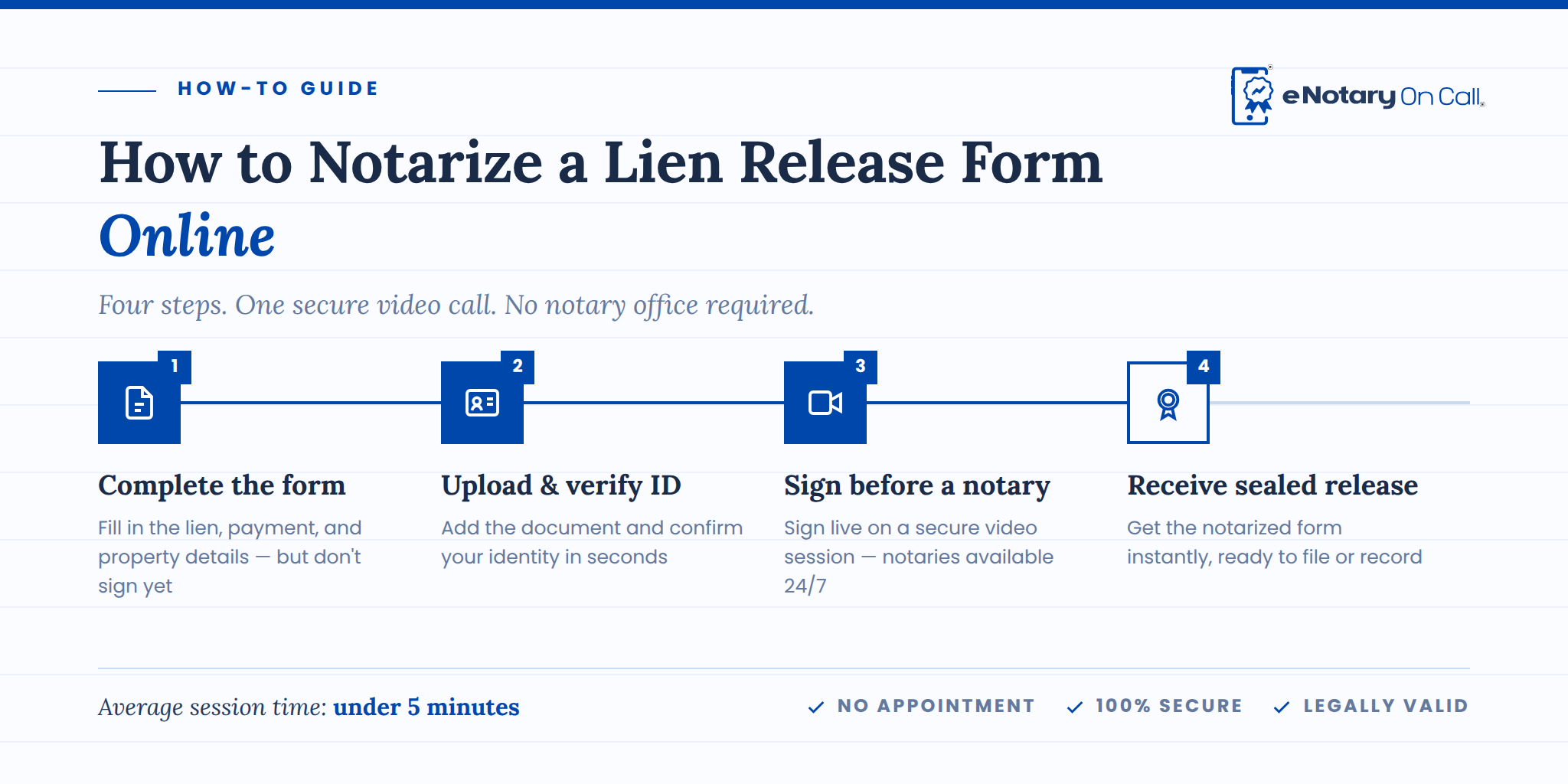
Yes, in many situations. Online notarization may allow parties to complete the process remotely. With eNotary On Call, users may generally –
- Upload the completed release
- Verify identity
- Meet with a commissioned notary
- Sign remotely
- Receive finalized documents
Pro Tip: Confirm whether the receiving agency or recording office accepts electronically notarized documents before proceeding.
What Happens After the Lien Release Form is Signed?
Many people think notarization is the final step. So, you should follow some additional steps before stopping –
- Filing the release
- Updating title records
- Recording with government offices
- Providing copies to affected parties
Why It Matters: A signed release that is never submitted may leave ownership records unchanged.
Common Mistakes People Make
- Assuming Payment Automatically Removes the Lien
- Filing Incomplete Documents
- Missing Recording Requirements
- Using Incorrect Asset Information
- Waiting Too Long to Submit the Release
The administrative process often matters just as much as the financial payoff.
Why People Use eNotary On Call for Lien Documents
Many people prefer eNotary On Call because it helps simplify document execution. Benefits may include –
- Remote notarization
- Flexible scheduling
- Reduced travel
- Secure identity verification
- Faster completion
Why It Matters: Simplifying paperwork can reduce unnecessary delays when loans and ownership records are involved.

Final Thoughts
A Lien release form may seem like the final administrative detail after a debt is paid, but legally, it often marks the moment ownership is fully cleared. Unnecessary delays and future title issues can be avoided by understanding what the document does, who signs it, when notarization matters, and how filing works.
And completing the notarization process can become one of the easiest parts of closing the chapter on a financial obligation with eNotary on call.
Frequently Asked Questions
1. Is a lien release form proof that the debt is paid?
Generally, yes. A lien release form is commonly used to confirm that the obligation associated with the lien has been satisfied and that the lienholder no longer holds legal rights against the property.
2. Who signs a lien release form?
In most situations, the lienholder signs the release because they are the party giving up the legal claim. The owner or borrower usually does not release their own lien. Requirements may vary depending on the type of lien and local filing procedures.
3. Does a lien release form always require notarization?
Not always. Some situations may not require notarization, but recording offices and institutions may still prefer notarized documents for verification purposes. Checking local requirements before signing helps avoid unnecessary delays.
4. What happens if a lien is paid but never released?
If the release process is not completed, records may continue to show an active lien even after payment has been made. This can create problems during refinancing, transfers, or future transactions.
5. Can I file a lien release form myself?
In many situations, yes. Depending on local procedures, individuals may submit release documents directly to the appropriate office. However, filing requirements, fees, and supporting documents can vary.