 by
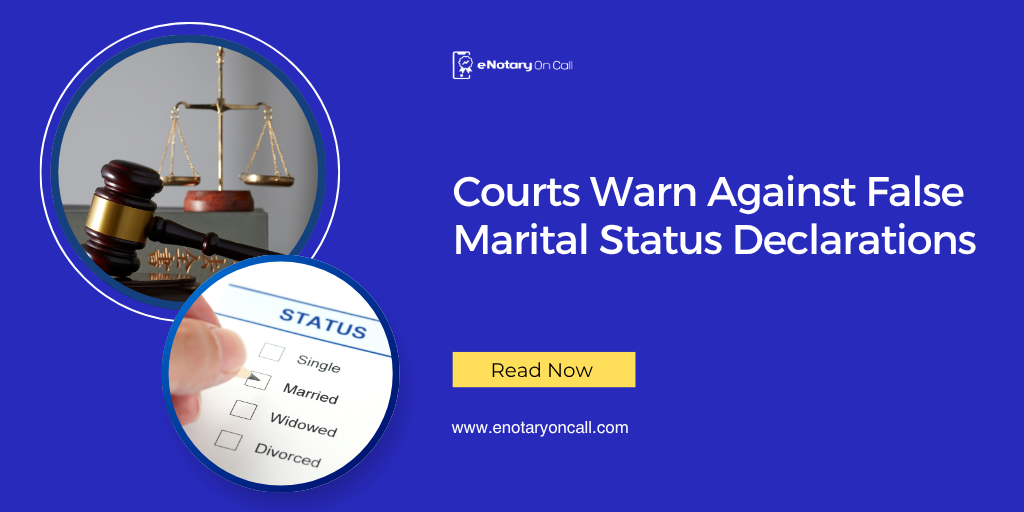
by As affidavits, legal filings, and official documentation are now under sharper judicial scrutiny across the United States, the Marital status declarations are becoming a routine requirement. Courts are increasingly warning individuals against misrepresenting their marital status, emphasizing that even seemingly minor inaccuracies can carry serious legal consequences.
The accuracy of Marital Status Declarations has become a critical issue across immigration filings, property transactions, and financial disclosures. Recent judicial observations highlight a growing concern as false declarations are not only misleading but may also amount to fraud, perjury, or intentional misrepresentation.
Recent judicial observations highlight a growing concern: false declarations are not only misleading but may also amount to fraud, perjury, or intentional misrepresentation.
Rising Legal Attention on Marital Status Declarations
Courts have begun to take a firmer stance on inaccuracies in Marital Status Declarations, especially when such misstatements influence legal or financial outcomes. Judges across jurisdictions have noted an increase in –
- Incorrect declarations in affidavits
- Misrepresentation in property ownership documents
- False marital status claims in immigration filings
- Discrepancies in financial disclosures
These issues often arise when individuals incorrectly declare themselves “single,” “married,” or “divorced”, either intentionally or due to negligence.
Key Insight: Courts are no longer treating these errors as harmless clerical mistakes. Instead, they are recognizing that marital status directly affects legal rights, inheritance, financial obligations, and eligibility for benefits, making accuracy essential in every declaration.
Why Marital Status Declarations Matter Legally?
A person’s marital status plays a central role in determining their legal standing in many areas. These include property ownership and transfer rights, spousal consent requirements, tax filings and benefits, immigration eligibility, insurance claims, and beneficiary rights.
Why It Matters: An incorrect marital status declaration can lead to invalid contracts, disputed property claims, or denial of benefits. In some cases, it can even result in legal action against the individual who made the false statement.
Common Situations Where False Declarations Occur
Courts have identified several recurring scenarios where Marital Status Declarations are misrepresented.
- Real Estate Transactions – Individuals sometimes declare themselves as unmarried to avoid obtaining spousal consent in property deals. This can lead to invalid property transfers, legal disputes, or challenges to ownership titles.
- Immigration Applications – Applicants may misstate their marital status to meet eligibility criteria or simplify documentation. However, discrepancies can result in visa denials, application rejections, or legal penalties.
- Financial and Loan Documents – Some individuals incorrectly declare marital status to influence loan approvals or financial disclosures.
- Affidavits and Legal Filings – False statements in sworn affidavits are particularly serious because they are made under oath.
Key Insight: In many cases, individuals underestimate the seriousness of these declarations. What seems like a minor detail can significantly alter legal rights and obligations, making accuracy non-negotiable.
Courts Emphasize Accountability and Verification
Judicial authorities are now placing greater responsibility on individuals to ensure the accuracy of their declarations. Courts have emphasized that –
- Ignorance of facts is not a valid defense
- Carelessness does not excuse false declarations
- Individuals are responsible for verifying their own information
Why It Matters: Courts aim to deter misuse of legal documents and maintain the integrity of official records by reinforcing accountability. This also ensures that legal processes remain fair and transparent for all parties involved.
Legal Consequences of False Marital Status Declarations

Providing false information in Marital Status Declarations can lead to serious consequences.
- Perjury Charges– False statements may constitute perjury if the declaration is made under oath.
- Civil Liability – Incorrect declarations can lead to contract disputes, financial penalties, or lawsuits from affected parties.
- Document Rejection – Authorities may reject applications or filings if discrepancies are detected.
- Criminal Penalties – Criminal charges may apply in severe cases involving fraud or intentional deception.
Key Insights: Legal consequences extend beyond immediate penalties. False declarations can create long-term complications, including challenges to property ownership, inheritance disputes, and damaged credibility in future legal matters.
Increased Scrutiny in Notarized Documents
Notarized affidavits and declarations are receiving particular attention from courts. Notaries are expected to –
- Verify the identity of the signer
- Ensure the document is signed voluntarily
- Confirm awareness of the contents
However, notaries do not verify the truth of the information itself.
Why It Matters: This places the responsibility squarely on the individual making the declaration. False information can still lead to legal consequences even if a document is notarized. Services like eNotary On Call provide secure notarization processes, but the accuracy of the content remains the signer’s responsibility.
Preventing Errors in Marital Status Declarations
Individuals should take proactive steps to avoid legal complications.
- Verify Your Current Legal Status – Ensure your marital status is up to date, consistent across documents, and supported by official records.
- Keep Supporting Documents Ready – Maintain copies of marriage certificates, divorce decrees, and legal separation documents.
- Avoid Assumptions – Always rely on legal documentation. Do not assume your status based on personal circumstances.
- Review Documents Carefully – Before signing any affidavit or declaration, double-check all details and ensure they are consistent with other records.
Pro Tip: Consult a legal professional before making a declaration if you’re unsure about your legal marital status, especially in cases involving separation or foreign marriages.
Role of Legal Professionals and Institutions
Lawyers, notaries, and institutions are also being encouraged to play a more active role in preventing errors. They can help by –
- Reviewing declarations for accuracy
- Advising clients on legal status
- Ensuring compliance with documentation requirements
Key Insight: Professional guidance can significantly reduce the risk of errors and ensure that declarations meet legal standards, but the ultimate responsibility lies with the individual.
Growing Importance of Digital Documentation
Marital Status Declarations are becoming more frequent and accessible with the rise of online notarization and digital filings. However, digital convenience also increases the risk of rushed submission, overlooked details, and inconsistent records.
The need for accuracy becomes even more critical as documentation becomes faster and more digital. Errors can spread quickly across multiple systems, making corrections more complex.
Key Takeaways: Courts are increasingly warning against false Marital Status Declarations, highlighting their importance in legal, financial, and administrative processes. Misrepresenting marital status, whether intentional or accidental, can lead to serious consequences, including legal penalties, document rejection, and long-term complications. As scrutiny increases, individuals must ensure that their declarations are accurate, consistent, and supported by proper documentation. Careful review and professional guidance can help prevent costly mistakes.
Conclusion
The growing judicial focus on Marital Status Declarations reflects a broader effort to maintain accuracy and accountability in legal documentation. What may seem like a small detail can have far-reaching consequences, affecting everything from property rights to legal eligibility.
Individuals must approach these declarations with care, as courts continue to tighten scrutiny, ensuring that every statement is accurate and properly documented.
Frequently Asked Questions
1. What is a marital status declaration?
A marital status declaration is a statement that confirms whether a person is single, married, divorced, or widowed. It is often included in legal documents, affidavits, and official filings. This information helps determine legal rights and obligations.
2. Can false marital status declarations lead to legal action?
Yes, providing false information can lead to serious legal consequences. If the declaration is made under oath, it may result in perjury charges. In other cases, it can lead to civil disputes or financial penalties.
3. Does notarization make a declaration legally valid?
Notarization confirms the signer’s identity and the voluntary nature of the signature. However, it does not verify the truth of the information in the document. The responsibility for accuracy remains with the individual.
4. How can I correct a false marital status declaration?
You can correct errors by submitting a revised affidavit or updated documentation to the relevant authority. Supporting documents such as marriage certificates or divorce decrees may be required. It is important to act quickly to avoid further complications.
5. Why are courts focusing more on marital status declarations now?
Courts are seeing an increase in cases where incorrect marital status affects legal outcomes. As a result, they emphasize accuracy and accountability. This helps ensure fairness and integrity in legal and administrative processes.